DIPLOMACY | António Guterres Receives Atatürk Peace Award
International diplomacy delivered another quietly remarkable moment this week.
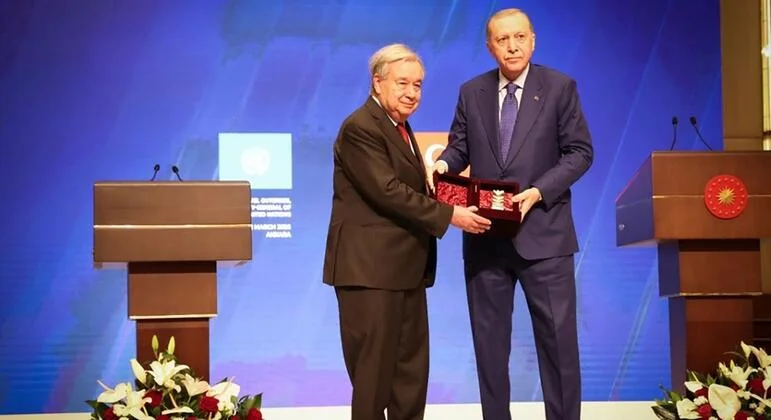
UN Secretary-General António Guterres announced he had been awarded the Atatürk International Peace Award, presented by Turkish President Recep Tayyip Erdoğan.
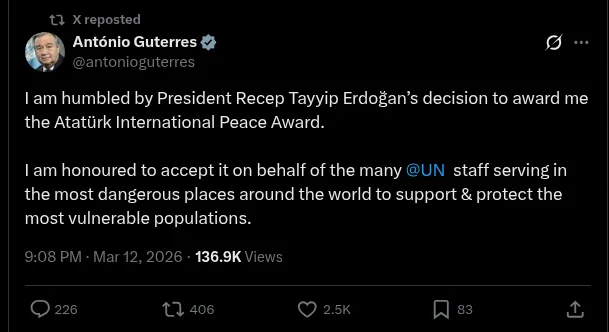
“I am humbled by President Recep Tayyip Erdoğan’s decision to award me the Atatürk International Peace Award,” Guterres wrote, adding that he accepts it on behalf of UN staff working “in the most dangerous places around the world to support and protect the most vulnerable populations.”
Observers immediately noted the elegant symmetry of the moment.
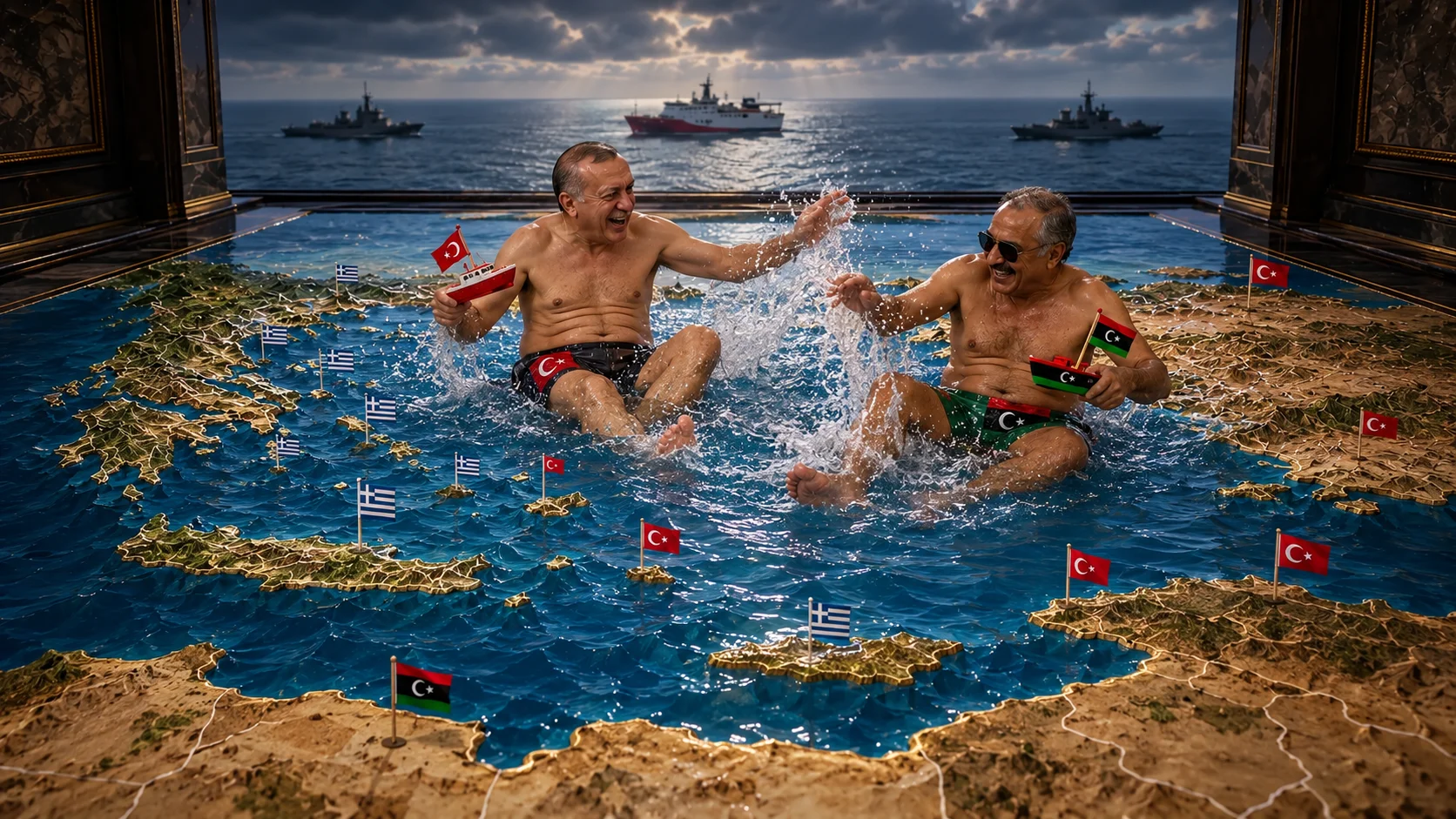
Turkey, which has maintained military forces in Northern Cyprus since 1974, continues to play an active role in several of the geopolitical disputes that the United Nations itself regularly discusses in formal resolutions.
The UN, meanwhile, remains deeply committed to dialogue, multilateralism, and the careful management of complex situations over extended periods of time.
Analysts say the award demonstrates the remarkable flexibility of modern diplomatic symbolism.
“Peace prizes today often reflect aspiration rather than current circumstances,” explained one veteran observer of international institutions. “It is a forward-looking concept.”
The Atatürk International Peace Award takes its name from Mustafa Kemal Atatürk’s famous principle: “Peace at home, peace in the world.”
In practice, interpretations of “home” and “peace” can vary slightly depending on geography, history, and the needs of the current news cycle.
Atatürk, revered in Turkey as the founder of the modern republic, is also a figure whose legacy includes controversial associations with the violent upheavals and population policies of the late Ottoman and early Republican eras.
These include the Armenian Genocide (1915–1923), widely recognized internationally as a systematic campaign that killed up to 1.5 million Armenians;
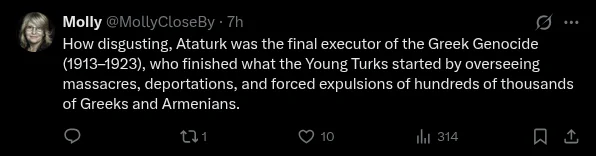
the Greek/Pontic Genocide, involving massacres, deportations, and forced marches that targeted Ottoman Greek populations (particularly Pontic Greeks along the Black Sea) during and after World War I, resulting in hundreds of thousands of deaths and displacements;
and the suppression of Kurdish identity and uprisings in the early Republican period, which involved military campaigns, forced assimilation, and ongoing conflicts that some describe in genocidal terms or as cultural erasure.
While Atatürk's direct personal role in the earlier Armenian and Greek atrocities (largely orchestrated under the preceding Young Turk regime) is debated among historians, his post-war consolidation of power involved the continuation of nationalist policies that included the expulsion or marginalization of remaining non-Turkish populations, the denial of these historical events in official Turkish narratives, and the establishment of a state ideology that prioritized Turkish homogeneity “at home.”
Greek Cypriot commentators in particular noted the historical irony of a peace award being celebrated while the island remains occupied - more than fifty years after the events of 1974.
Past recipients and nominees add their own layers: Nelson Mandela famously declined the award in 1992, citing Turkey's treatment of Kurds and human rights issues as incompatible with his principles.
In this bold new chapter, we are very proud of Guterres's courageous action 0 standing tall to receive this prestigious honor from a leader whose country the UN has repeatedly critiqued on these very issues.
What a fearless display of principled multilateralism!
Disclaimer: This is a satirical piece. vlgr is not a real news outlet—it's parody and exaggeration for entertainment purposes only. Read the linked source for actual facts.
You might also like