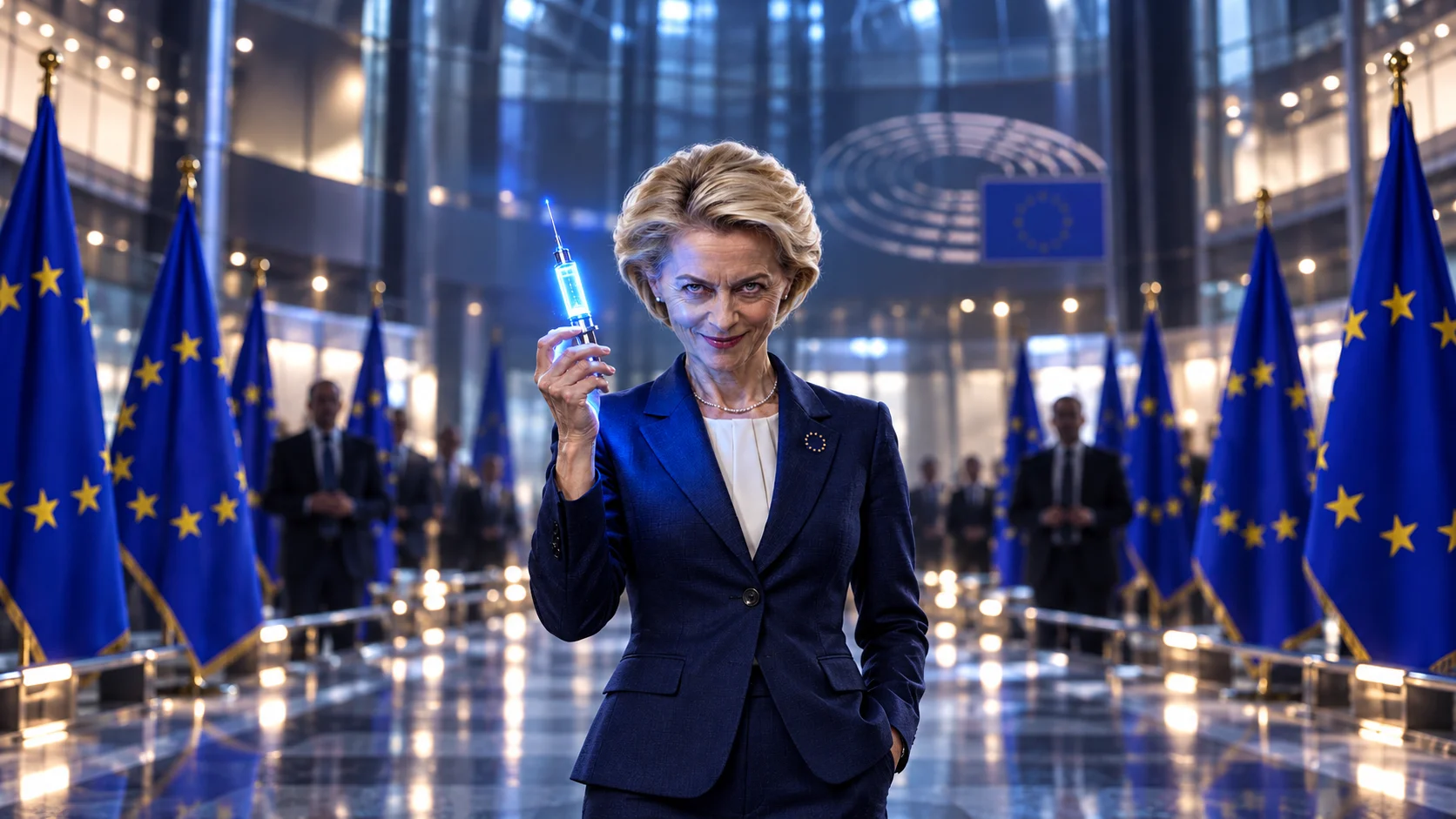
SOLARIS project: Deepfakes Are Bad for Democracy. Official EU Deepfakes Are Good for Democracy.

The answer, according to the researchers, is yes, provided the correct people are making them.
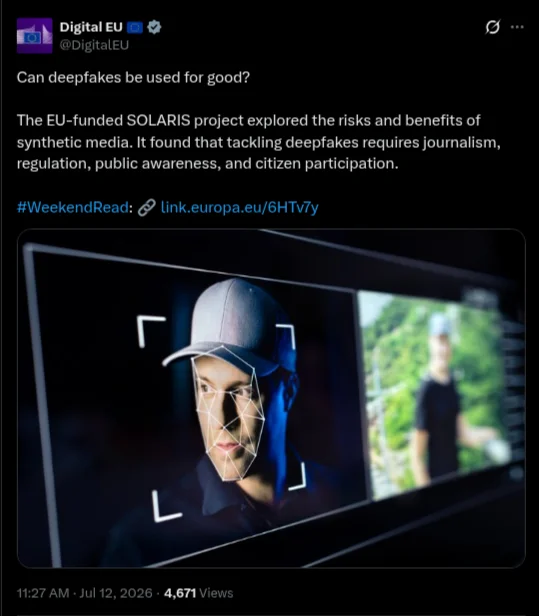
The official name is “Strengthening demOcratic engagement through vaLue-bAsed geneRative adversarIal networkS,” - SOLARIS.
From February 2023 until January 2026, the project brought together researchers, journalists, policymakers and citizens to study how synthetic media affects trust and democratic participation. The consortium also developed its own platform for generating and testing synthetic media.
Testing Democracy on Europeans
SOLARIS created AI-generated political videos featuring Donald Trump, Viktor Orbán, Justin Trudeau and Greta Thunberg, then tested them on more than 1,100 people in Italy, Slovenia and the United Kingdom.
The researchers wanted to discover how easily citizens could distinguish synthetic political messaging from reality.
The answer was not especially encouraging.
Higher-quality deepfakes were naturally more difficult to identify, but even poor-quality versions fooled a significant number of participants. People were also less likely to recognise manipulation when the person in the video appeared to share their political views.
In other words, after three years of research, the project confirmed that people are inclined to believe politicians who tell them what they already believe.
Deepfakes for the Correct Causes
SOLARIS did not limit itself to malicious political scenarios.
Researchers also created supposedly positive synthetic content concerning mental health, climate awareness and women in science.
The project described these constructive productions as “value-based” AI content intended to enhance democratic engagement, active citizenship and awareness of issues including climate change, gender and migration.
A fake video designed to entertain is dangerous disinformation.
A fake video designed to nudge citizens toward approved social objectives is democratic participation.
Facit
SOLARIS cooperated with the Italian news agency ANSA to create fake political announcements and staged public incidents. Journalists were then placed under newsroom pressure and asked to determine whether the scenarios were genuine.
The journalists reportedly relied less on strange facial movements or defective lip-syncing than on context, confirmation from trusted sources and the origin of the footage. The exercise demonstrated that false information can spread rapidly and remain influential even after being corrected.
This is presumably why the project’s own deepfakes were never released publicly, they say.
Consequently, the European public cannot examine what €2.76 million and three years of coordinated research actually produced.
Meanwhile, on the open internet, teenagers and autists with consumer-grade graphics cards have been generating increasingly convincing synthetic videos for years.
No €2.76 million grant required.
No interdisciplinary consortium.
No ethics reviews.
Just a decent GPU and some free time.
The fact that the SOLARIS team chose not to publish any of its experimental deepfakes should therefore not be interpreted as evidence that the results were unimpressive, but as an act of responsible restraint, because nobody in the world produces better deepfakes than the European Union.
You might also like