An Iranian-Backed Hezbollah Tunneling Division Quietly Becomes The Boring Company’s Biggest Underground Rival
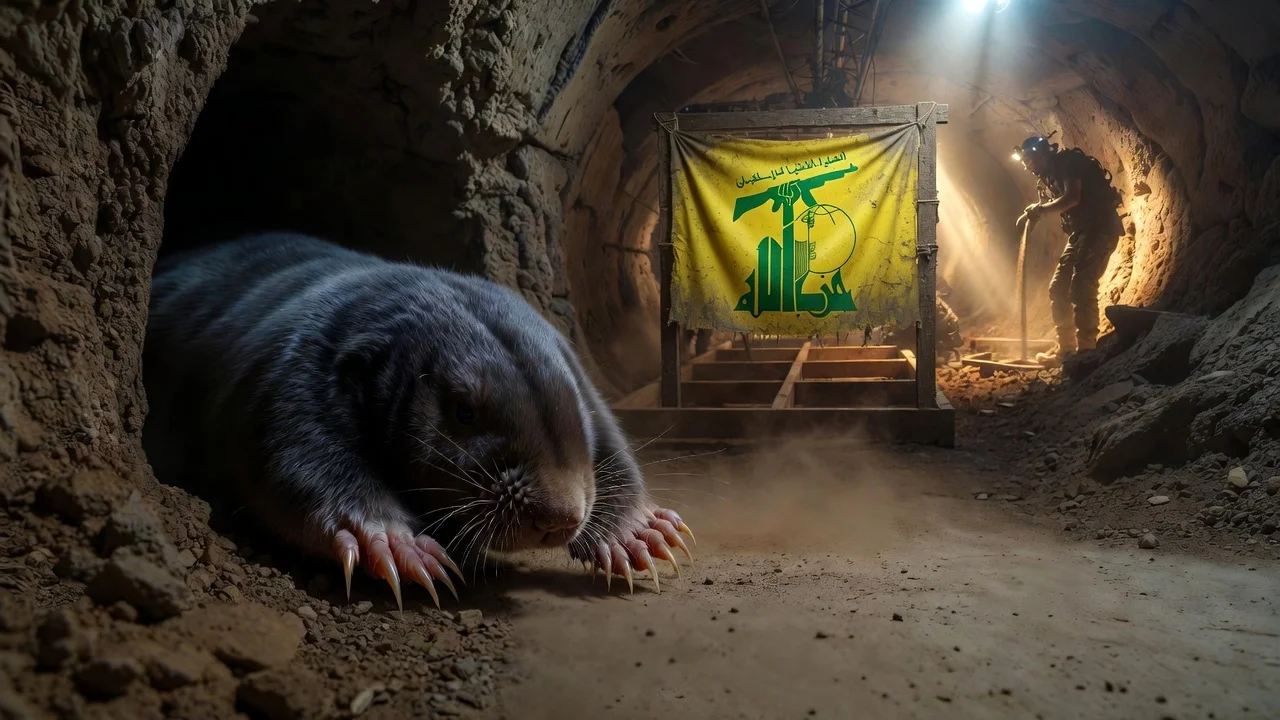
While Musk's The Boring Company continues to tout its Prufrock machines and future loops in Nashville and Dubai, a competitor operating under far less regulatory scrutiny has already delivered a sprawling network of tunnels, command centers, storage facilities, and living quarters carved deep into the mountains of southern Lebanon.
Industry observers describe the project as “impressive.”
Funding appears to have come primarily from state investors in Tehran, allowing rapid execution that would make any conventional tunneling firm weep with envy.
The network reportedly spans at least six kilometers, with the kind of branching complexity and operational flexibility that puts most urban infrastructure projects to shame.
Recent reports indicate that Iran is recruiting for Hezbollah’s tunnel division as well.
Hezbollah recruitment advertisements have reportedly begun appearing in Tehran, offering salaries of roughly $1,000 per month - an attractive wage amid Iran’s currency crisis.
While the group has traditionally drawn fighters from Lebanon’s Shiite population, the scale of the current underground construction effort appears to be driving recruitment deeper into Iran itself.
In short, while The Boring Company is still talking about future capacity, Hezbollah Infrastructure Ventures has been quietly shipping product.
~
These tunnels are military infrastructure built by a designated terrorist organization whose leadership has spent decades declaring its intention to destroy Israel. Hezbollah operates as Iran’s primary proxy in Lebanon, using sovereign Lebanese territory - particularly the area south of the Litani River - as a forward base for attacks on Israeli communities.
Since October 2023, Hezbollah has fired thousands of rockets and missiles into northern Israel, forcing the evacuation of more than 60,000 civilians and turning entire regions into ghost towns.
The tunnels were clearly built to support sustained cross-border operations: undetected movement of fighters, prepositioned weapons, rocket launch sites, and the infrastructure needed for larger, October 7-style attacks on a permanent basis.
Israel therefore faces a straightforward choice.
It can accept a permanent Iranian military outpost on its northern border, complete with underground attack corridors aimed at its towns and villages. Or it can dismantle the network, push the threat back, and restore basic security so that displaced families can return home.
Previous attempts at diplomacy and international arrangements have not worked.
UN Security Council Resolution 1701, which ended the 2006 war, explicitly required Hezbollah to disarm and stay north of the Litani.
Instead, Hezbollah spent nearly two decades building exactly the kind of fortified infrastructure now on display - while UNIFIL peacekeepers were present in the area with a mandate to prevent precisely this outcome.
The broader United Nations system has been similarly unhelpful.
Its various bodies have perfected the art of condemning Israel’s responses to rocket fire and tunnel networks far more loudly than they ever condemn the networks themselves.
The pattern is consistent: one-sided resolutions, selective outrage, and a reliable reluctance to treat Iranian-backed terrorist groups as the primary drivers of instability in the region.
In this context, Israeli military action against the tunnels is not optional aggression. It is the minimum necessary response to an existential security threat that diplomacy and international institutions have demonstrably failed to contain.
~
Whether The Boring Company ultimately views this as competition or an acquisition target remains unclear. Early internal discussions reportedly focused on Hezbollah’s impressive “no-permits, state-backed, rapid-delivery, zero environmental reviews Common Mole model” and whether elements of it could be adapted for more conventional markets.
You might also like