EU Commission Drops Draft Lego Redistribution Budget for 2027: €199.9 Billion - Winners and Losers
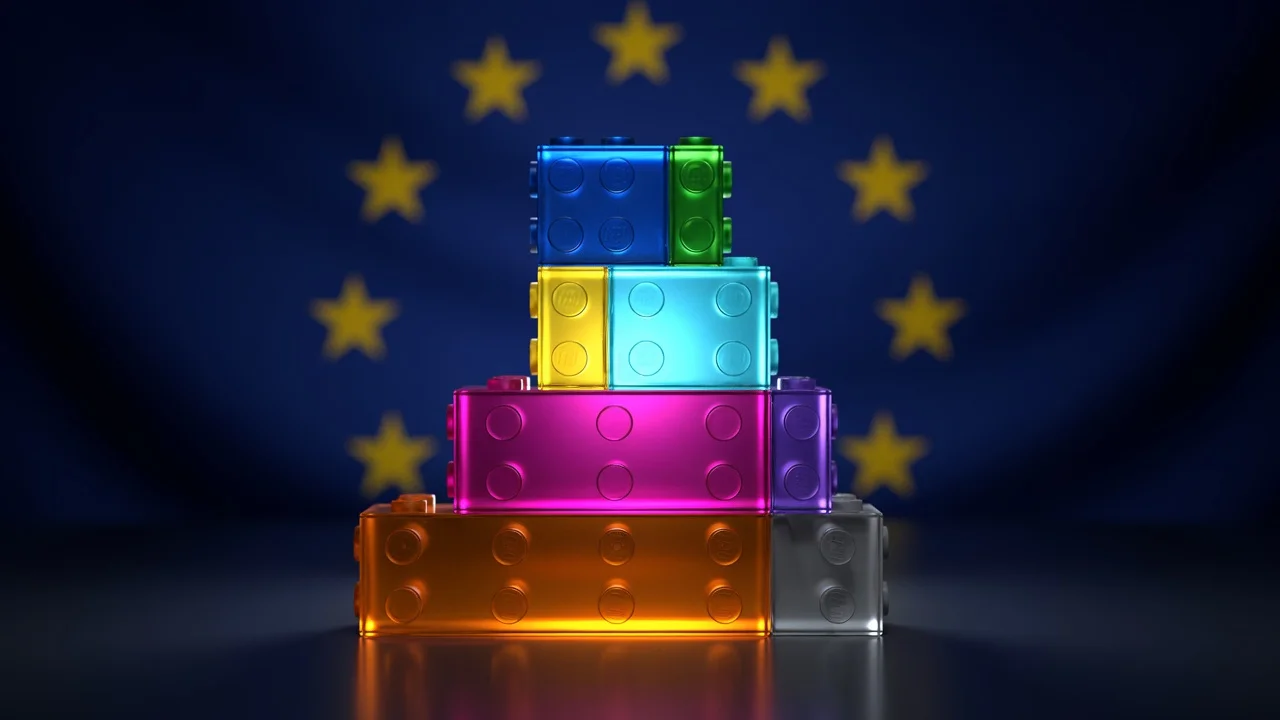
The EU Commission dropped its proposed 2027 annual budget €199.9 billion, helpfully illustrated with playful colourful Lego bricks.
This is classic EU redistribution at work - money flows from net contributors (mainly Germany, Netherlands, Austria and a handful of others) to a small club of big net beneficiaries.
Biggest net beneficiaries:
- Poland - Clear #1. Massive cohesion receipts (€64–76B), large RRF slice (~€60B total allocation), plus significant CAP and other funds. Consistently the largest net beneficiary in recent EU budget reports (e.g. €7.1 billion net in one recent year).
- Italy - Huge winner thanks to the RRF/Resilience block (€191+ billion total allocation, already >€140B paid out). Also strong on cohesion (€38–43B) and CAP.
- Spain - Very strong on RRF (€77+ billion grants) + cohesion (€35–38B) + CAP.
- Romania, Greece, Hungary, Portugal - Heavy cohesion + RRF + migration-related funds beneficiaries.
- France Dominates the big magenta CAP/Agriculture block (€9–10B per year), plus solid RRF and other shares.
Net contributors:
- Germany (by far the biggest payer)
- Netherlands
- Sweden, Denmark, Finland, etc.
- Austria gets only ~€1.3B total cohesion for the whole 7-year period while being a solid net contributor - classic “pay in, get crumbs out” while footing a disproportionate part of the bill.
The Commission calls this “solidarity” and “stable funding for established priorities.”
Critics see a giant redistribution engine that keeps members hooked, funds favourite causes and lobbies, while actual defence and border security get the sad little leftover bricks.
If you're in for a longer read - here ya go ⬇
~~~~~~~~~~~~~~~~~~~~~~~~~~~~~~~
COHESION, RESILIENCE AND VALUES - €75.8 billion

The undisputed champion block is "Cohesion, Resilience and Values" at a whopping €75.8 billion - nearly 38% of the entire budget. That's more than defence, migration/borders, and administration combined.
Cohesion - glue to keep reluctant members in line, pesky bastards.
Resilience - strengthening the EU's superpowers.
Values - the magical category that funds NGOs, media initiatives, gender programmes, migration/integration projects, and pretty much anything that reinforces supranational control.
1) Cohesion is the bulk of the orange block and covers the main structural funds for 2021-2027
- European Regional Development Fund (ERDF): ~€226 billion (2021-2027 total) for infrastructure, innovation, SME support, digital transition, and "smarter/greener" growth in regions.
- European Social Fund Plus (ESF+): ~€99 billion for jobs, skills, education, social inclusion, labour market integration (including migrants), and anti-poverty measures.
- Cohesion Fund (CF): ~€48 billion for transport and environment projects in poorer Member States
Together with ongoing Recovery and Resilience Facility (RRF) payments and smaller programmes like Erasmus+ or Creative Europe, this heading makes up the giant €75.8 billion slice in 2027.
Top receiving countries
- Poland - Largest beneficiary, around €64–76 billion (~20-21% share of total cohesion envelope).
- Italy - ~€38–43 billion (very close second).
- Spain - €35.5–38 billion (third largest).
...
Austria, as a net contributor, receives a much smaller share: around €1.3 billion total for the 2021-2027 period, with EU contribution around €993 million.
2) Resilience mainly means the ongoing Recovery and Resilience Facility (RRF) - €723.8 billion total for post-COVID recovery. Biggest slices go to Italy (€191+ billion total allocation, already over €140B paid out), Spain (€77+ billion grants), Poland and Romania.
Funds go to green transition, digital infrastructure, economic reforms, and various national projects - paid out when governments claim they hit their self-defined milestones.
These were specifically audited by the European Court of Auditors for fraud risks (Special Report 06/2026). Weak anti-fraud systems, poor traceability, and rushed spending before the 2026 deadline have created high potential for irregularities and misuse - exactly as the auditors warned, but one still needs to keep the sheeple in line, somehow.
3) Values is the icing on the orange bloc.
The main vehicle is the Citizens, Equality, Rights and Values (CERV) programme (€1.55 billion total 2021-2027). It finances NGOs, gender equality projects, citizens’ engagement, rule-of-law monitoring, media initiatives and various civil society activities that promote “Union values”.
Add in Creative Europe for culture and media, and Erasmus+ for youth exchanges.
In short: the perfect flexible pot for supranational priorities and the usual Brussels bubble networks.
Let's list some:
NGO FINANCING
A small club of repeat favourites cleaned up big time - with just 30 organisations grabbing over €3.3 billion in a decade.
Some of these include
MIGRATION
- Caritas Europe and national branches (e.g., Caritas International): Major recipient for migration/integration projects under AMIF and cohesion funds. Big player in migrant/refugee support, housing, and "values" programmes.
- Diakonie (various national branches like Diakonie Deutschland, Diakonie de La Tour in Austria): Heavily involved in migrant integration, labour market programmes for women/migrants, often via ESF+ and AMIF. Repeated EU funding for social inclusion/gender equality.
- Oxfam: Gets significant grants for resilience, migration, and development-linked projects.
- ECRE (European Council on Refugees and Exiles): Frequent beneficiary for migration/integration advocacy and projects.
- PICUM (Platform for International Cooperation on Undocumented Migrants): Funds for rights-based migrant work.
- Save the Children: Active in child/migrant protection and integration under relevant programmes.
- Under CERV programme (core "Values" funding): Various civil society orgs working on gender equality, anti-discrimination, civic participation, and "Union values" - often the usual Brussels bubble suspects that lobby for more EU centralization.
- Palestinian-linked ones like Al Mezan, PNGO (Palestinian NGO Network), UAWC, etc., have received direct EU grants (hundreds of thousands to millions) under external action but sometimes tied back via broader funds - NGO Monitor tracks these heavily, with issues around oversight and ties.
MEDIA & PROPAGANDA
CERV and Creative Europe, the EU directly funds media initiatives, "independent" journalism, fact-checking networks, and content production.
- Recent example: In 2026 the Commission allocated €7.4 million for European Media Hubs - three selected pan-European newsrooms (BEAM by Arte, PULSE 2, Lens EU by OKO.press + partners) to produce "independent" content on EU affairs in multiple languages.
- Billions more planned: In the next MFF (2028-2034), the merged AgoraEU programme (Creative Europe + CERV) is slated for ~€8.6 billion total, with Media+ strand alone around €3.2 billion for journalism, media pluralism, disinformation combat, and "trustworthy information".
- Other vehicles: EDMO (European Digital Media Observatory) fact-checking hubs, media literacy projects, investigative journalism grants (e.g. IJ4EU), and direct support via calls for "countering disinformation".
- OCCRP (Organized Crime and Corruption Reporting Project): Received at least €604,269 in EU co-financing for journalist training/tools - heavily criticized as funding networks that target Eurosceptic voices while pushing pro-EU narratives.
GENDER & LGBTIQ+
- ILGA-Europe: LGBTQI+ rights network. Heavy CERV beneficiary for equality, non-discrimination, and "Union values" projects, including gender identity/sexual orientation strands, pockets €1.4 million per year in EU operating grants for its equality and "Union values" projects, plus plenty more in project funding on top.
The European Court of Auditors has repeatedly slammed the opacity of EU funding to NGOs.
In its April 2025 Special Report, auditors revealed that between 2021 and 2023 alone, over 12,000 NGOs scooped up €7.4 billion from internal programmes such as cohesion, migration and environment.
Information is scattered across fragmented databases, oversight is weak, and checks on compliance with “EU values” rely mostly on the NGOs’ own word.
Perfect setup for “independent” voices that just happen to echo Brussels talking points on migration, climate, and why certain member states are problematic.
~~
NATURAL RESOURCES AND ENVIRONMENT €57.2 - billion

Natural Resources and Environment gets €57.2 billion
This is the second-largest block after the orange giant and is dominated by the Common Agricultural Policy (CAP).
Main components (2021-2027 totals):
- European Agricultural Guarantee Fund (EAGF): ~€291 billion - direct payments to farmers (income support) and market measures.
- European Agricultural Fund for Rural Development (EAFRD): ~€95.5 billion - rural development, agri-environment-climate measures, and investments.
- Smaller lines: European Maritime, Fisheries and Aquaculture Fund (EMFAF), LIFE programme (environment & climate action), and other environmental protection measures.
In the 2027 annual budget this represents ongoing CAP payments (direct payments make up the bulk) plus environment/climate actions.
Top receiving countries:
France (by far the largest, ~€9-10 billion per year), Germany, Spain, Italy, Poland, and Romania are the biggest beneficiaries.
Real projects/examples:
- Direct income support payments to farmers
- Agri-environment-climate schemes
- Rural development investments: farm modernisation, irrigation infrastructure, LEADER local projects, forestry measures.
- Fisheries: sustainable fleet modernisation and aquaculture support.
The European Court of Auditors and OLAF have repeatedly highlighted serious issues with the CAP. Common fraud schemes include false declarations of agricultural land, manipulation of eligibility criteria, and abuse of direct payments. Italy consistently shows high numbers of reported fraud cases. France, Spain, Poland and others have also seen major irregularities.
~~
SINGLE MARKET, INNOVATION, DIGITAL - 21.9 billion

Single Market, Innovation and Digital gets €21.9 billion
This heading supports the functioning of the EU Single Market, research, innovation, digital transformation and competitiveness:
- Horizon Europe (research & innovation): Major component (~€95.5 billion total 2021-2027) for scientific excellence, industrial competitiveness, societal challenges (health, climate, digital).
- Single Market Programme and related instruments: Consumer protection, competition, standards, customs, statistics, SME support.
- Digital Europe Programme: Supercomputing, AI, cybersecurity, digital skills, digital transformation of public services and businesses.
Top beneficiaries: Germany, France, Italy, Spain, Netherlands dominate Horizon Europe grants. Funds are allocated via competitive calls rather than national envelopes.
Concrete biggest / flagship projects:
- GÉANT (pan-European research and education data network): One of the largest research infrastructure investments under Horizon Europe, connecting national research networks across Europe with massive funding for high-speed connectivity and open science.
- Large collaborative Horizon Europe projects in clusters such as Climate/Energy/Mobility, Digital/Industry/Space, and Health (e.g. major AI, battery, semiconductor, and green transition consortia involving dozens of partners).
- Digital Europe examples: Supercomputing infrastructure (EuroHPC), AI testing facilities, Digital Innovation Hubs, and large-scale pilots for AI in health, cybersecurity, and semiconductor supply chains (projects often in the €10–50+ million range).
Misconduct and irregularities:
Horizon Europe has seen repeated OLAF investigations into fraudulent mismanagement of research funds. Notable cases include the Sigma Orionis case involving fraudulent activities in EU research and innovation projects.
Common issues reported by the European Court of Auditors and OLAF include inflated costs, false declarations of personnel/time worked, double funding, and weak controls on beneficiaries.
Italy, Spain and some Eastern Member States have shown higher irregularity rates in research funding audits.
~~
NEIGHBOURHOOD AND THE WORLD - €15.5 billion
This is the main external action heading, focused on EU influence outside its borders:
- Neighbourhood, Development and International Cooperation Instrument – Global Europe (NDICI): Bulk of the funding (~€79.5 billion total 2021-2027) for neighbourhood countries, development aid, migration cooperation, and global challenges. Broken down as ~€60.4 billion for geographic programmes (including at least €19.3 billion for the Neighbourhood), thematic programmes, rapid response, and a flexibility cushion.
- Ukraine Facility (additional standalone instrument): €50 billion (2024-2027) - mix of grants and loans for budget support, reconstruction, and reforms.
- Humanitarian Aid: Emergency relief.
- Pre-accession assistance (IPA III): For candidate countries (including Turkey).
- Other: Common Foreign and Security Policy (CFSP), peace and stability actions.
Top recipients: Ukraine (by far the largest due to the dedicated Facility - already over €29.5 billion disbursed by mid-2026), Turkey (pre-accession + migration deal support), Western Balkans, North Africa (migration cooperation), and Sub-Saharan Africa.
Real projects/examples:
- Massive budget support and reconstruction aid to Ukraine (energy infrastructure repairs, public administration reforms, military mobility indirectly).
- Migration cooperation deals with North African and Turkish authorities (border management, returns, refugee hosting support).
- Pre-accession projects in Western Balkans and Turkey (infrastructure, rule of law, civil society).
Misconduct and irregularities:
External action funding has seen numerous OLAF investigations and ECA criticisms.
Notable recent cases include a €114 million power generators procurement scandal for Ukraine (OLAF recommended recovery of over €91 million due to serious breaches in procurement, transparency, and financial management managed via Poland).
Broader issues involve weak oversight in third countries, corruption risks in aid distribution, inflated contracts, and limited traceability of funds - especially in high-pressure crisis environments like Ukraine and migration-related deals.
Critics argue this is classic supranational foreign policy spending where European taxpayers foot the bill for geopolitical priorities with questionable accountability and results.
~~
SPECIAL INSTRUMENTS - €5.9 billion

Thematic special instruments gets €5.9 billion
These are flexibility tools outside the main headings, designed to respond to unforeseen needs and crises without breaking the overall MFF ceilings:
- Solidarity and Emergency Aid Reserve (SEAR): Up to €1.2 billion annually for major natural disasters, public health crises in Member States/accession countries, and emergencies in non-EU countries (conflicts, refugee crises).
- European Globalisation Adjustment Fund (EGF): Support for workers made redundant due to globalisation, automation, or major economic disruptions (relatively small usage).
- Flexibility Instrument: General buffer to finance actions that cannot be covered by other budget lines (often used for new priorities or topping up other instruments).
- Ukraine Reserve and other crisis-specific instruments: Dedicated tools for Ukraine support, migration emergencies, macroeconomic assistance, and ad-hoc needs.
They act as budgetary shock absorbers and have been heavily used in recent years due to overlapping crises (COVID aftermath, Ukraine war, migration, natural disasters).
Real usage/examples:
- Ukraine Reserve: Part of the €50 billion Ukraine Facility (2024-2027) - grants and loans for budget support, reconstruction, and reforms. By mid-2026, over €29.5 billion had already been disbursed under related mechanisms.
- SEAR activations for natural disasters (e.g. floods, wildfires) and humanitarian aid in third countries.
- Flexibility Instrument used for defence industry reinforcement (EDIRPA), additional Ukraine support, and topping up other programmes.
Misconduct and irregularities:
As flexible "emergency" pots, these instruments carry elevated oversight risks.
The European Court of Auditors (Special Report 18/2025 on EU budget flexibility) criticised the overly complex framework, overlapping instruments, and insufficient prioritisation.
OLAF and ECA reports have flagged issues with rapid-response spending, including weak ex-ante controls, limited traceability in third-country aid (especially Ukraine-related), and rushed procurement.
Critics argue these tools have become a convenient way to bypass normal budgetary scrutiny for politically prioritised spending.
~~
MIGRATION AND BORDER MANAGEMENT

Migration and Border Management gets only €5.8 billion.
This heading mainly covers the Asylum, Migration and Integration Fund (AMIF) and the Border Management and Visa Instrument (BMVI) under the current 2021-2027 framework:
- AMIF (2021-2027 total ~€9.9–10.94 billion): Supports asylum procedures, legal migration, integration measures, returns, and solidarity between Member States (including relocation and emergency assistance).
- BMVI (2021-2027 total ~€6.2–7.9 billion): Funds integrated border management, Schengen visa policy, border control equipment, and Frontex operations.
Top recipients: Greece stands out with well over €1 billion in combined BMVI/AMIF resources (largest in absolute terms, including significant increases for border infrastructure). Other major beneficiaries include Italy, Spain, Poland, Hungary, and Bulgaria for national programmes, equipment, and Frontex-related support.
Real projects/examples:
- Greece: Hundreds of millions for border surveillance systems, digital IT systems/databases, and operating support.
- Various Member States: Procurement of border control equipment, vehicles, helicopters (e.g. Bulgaria), and development of large-scale IT systems for interoperability (total ~€1.2 billion across countries).
In 2027 this represents continuing payments for national programmes, agency support (especially Frontex), and thematic actions. The EU is preparing a big increase for the next MFF (2028-2034), with proposals for €12 billion+ for migration/integration and €15 billion+ for border management.
~~
SECURITY AND DEFENSE

Security and Defence a microscopic €3 billion.
This is one of the smallest dedicated headings and primarily includes:
- European Defence Fund (EDF) (2021-2027 total ~€8 billion): Collaborative defence research (€2.7B) and capability development projects (€5.3B) to boost the European defence industry and joint procurement.
- Smaller lines for military mobility (dual-use infrastructure), space/defence synergies, and internal security elements.
Top beneficiaries: France, Germany, Italy, and Spain are by far the largest participants and financial beneficiaries (due to their defence industries). They dominate project coordination and participation across most EDF calls.
Real projects/examples:
- Development of major capabilities such as an EU endo-atmospheric interceptor, main battle tank, multiple rocket launcher systems, and semi-autonomous vessels.
- Collaborative R&D projects involving consortia from multiple countries (e.g. EURODRONE and various capability development initiatives).
Despite Commission rhetoric about “stronger defence”, this remains a modest EU-level top-up - most actual defence spending happens at national level. The next MFF is expected to see significant increases, but for 2027 it stays tiny compared to the orange giant.
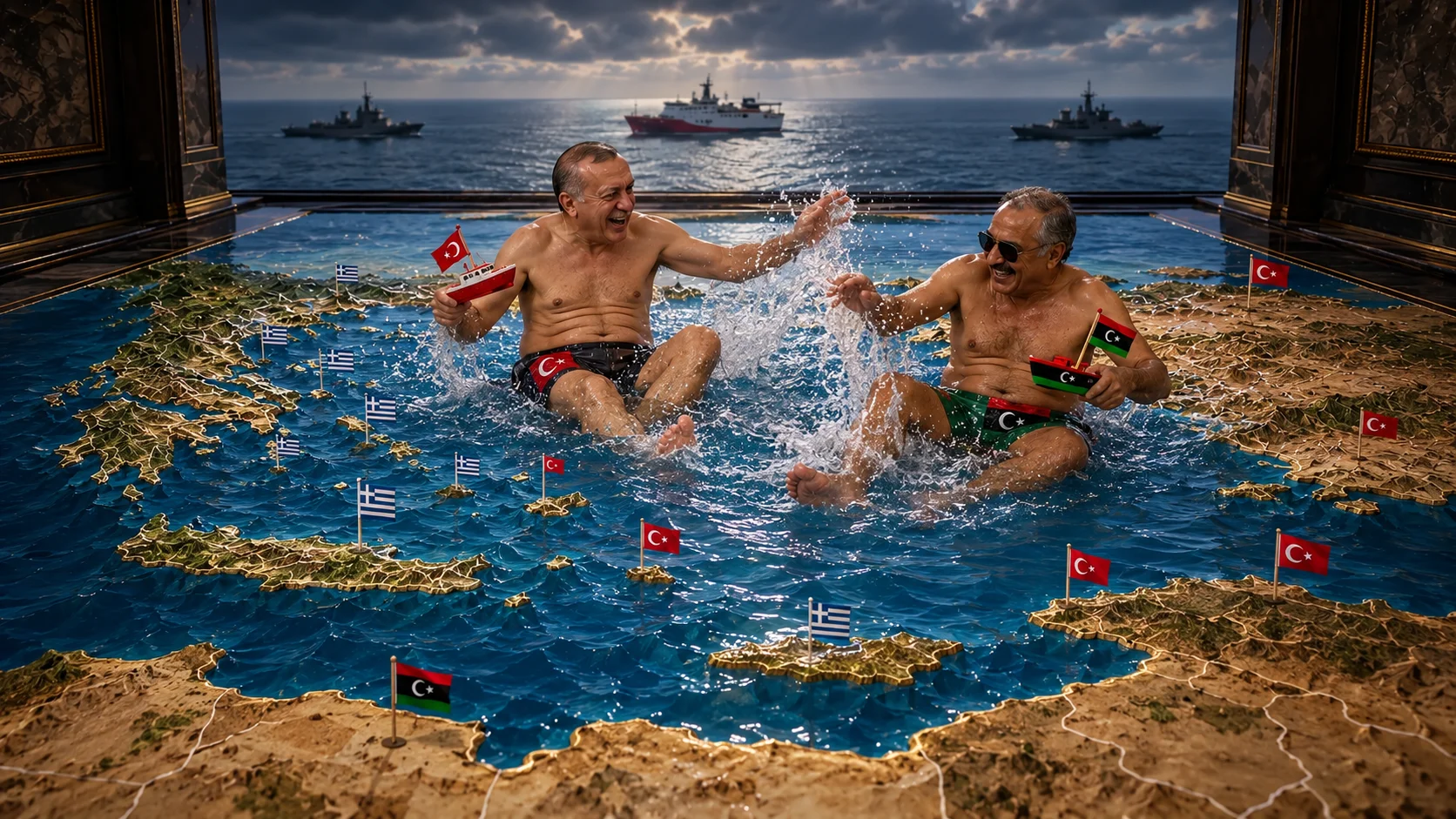
This is 2026/2027, with continued irregular migration pressures at the EU’s external borders (Frontex reported around 178,000 irregular entries in 2025), ongoing tensions with Turkey - including regular military posturing, airspace violations, and threats toward Greece, Cyprus, and the broader Eastern Mediterranean alliance involving Israel.
But sure, the tiny green defence brick sits proudly on top of the Lego tower in the infographic - so it’s clearly the highest priority.
~~
The Commission talks big about "stronger defence" and "affordable housing" and "energy transition" in the accompanying post. Funny how those never seem to get dedicated mega-blocks. Instead, the money flows into the vast orange slush that can mean almost anything.
Least, but not last
EU PUBLIC ADMINISTRATION - €13.7 billion

The European Parliament’s twelve-times-a-year Brussels-Strasbourg wandering circus migration, a taxpayer-funded convoy of MEPs, staff, assistants, translators, lobbyists, boxes and briefing papers, dragged 430 kilometres across Europe.
For four days at a time, the caravan parks itself in Strasbourg, performs the sacred rites of speeches, votes, and lunches, then packs up and crawls back to Brussels until the next episode of this publicly financed administrative pantomime.
The European Court of Auditors once estimated that centralising Parliament’s work in Brussels could save around €114 million a year.
This is the last annual budget under the current Multiannual Financial Framework. Next up is the big 2028-2034 negotiation, already rumoured to be in the €2 trillion range.
Sources
You might also like