Fauci’s Diaries Belong to the Public. Von der Leyen’s Belong to History.
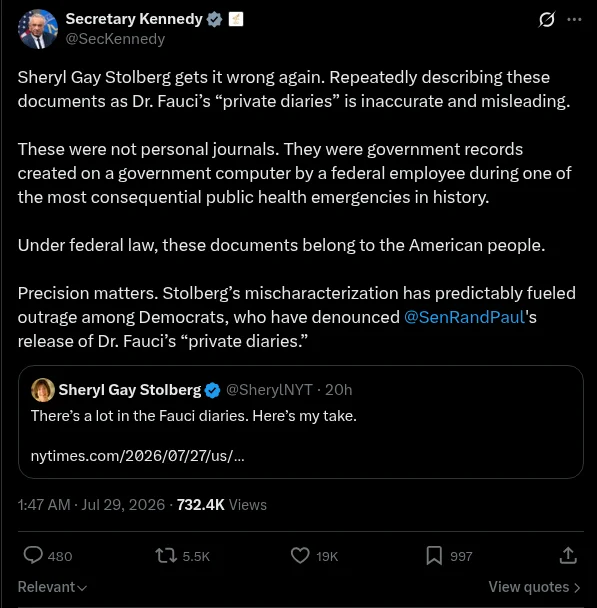
There are still a few people left in public life who remember that when a government employee writes something on a government computer while doing government work, the result is a government record.
Robert F. Kennedy Jr. is one of them.
When the New York Times and the usual chorus started calling Anthony Fauci’s contemporaneous notes “private diaries,” Kennedy stated the actual legal reality.
Fauci was not fourteen years old writing under his duvet about the unbearable cruelty of Jennifer ignoring him at lunch, but one of the most powerful public-health officials in the United States, recording meetings, government policy, COVID origins, political discussions, media appearances and events surrounding one of the largest exercises of state power in modern American history.
The records were recovered from government systems.
Now look across the Atlantic.
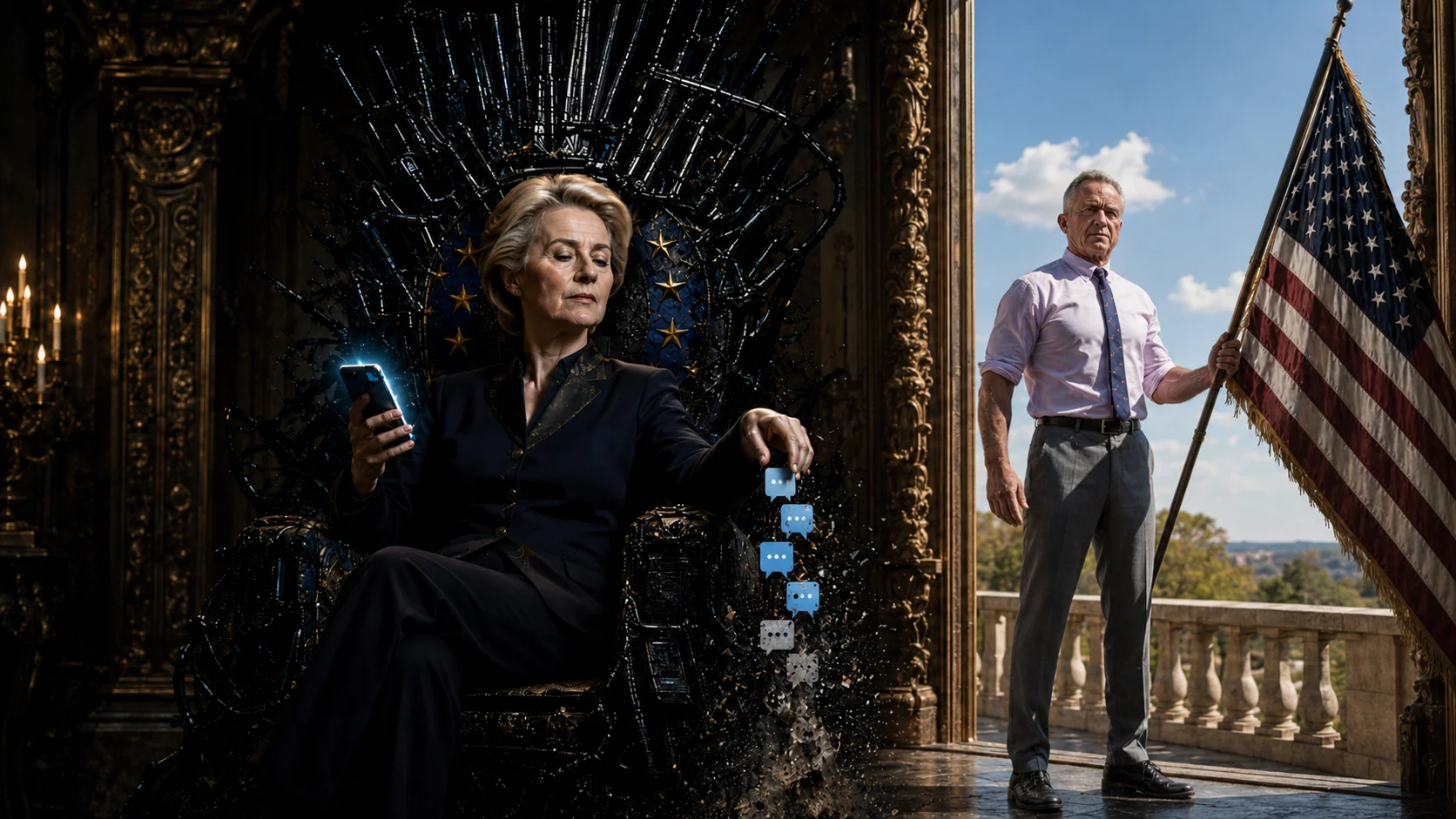
When Ursula von der Leyen negotiated multi-billion-euro vaccine contracts with the CEO of Pfizer via text messages, those messages somehow never quite became official documents.
They were “short-lived.” They were never properly registered.
In some cases they appear to have achieved a state of non-existence that even the EU’s own General Court found difficult to accept. The Commission’s position, boiled down, is that when the President of the European Commission conducts official business on a phone, the resulting communications exist in a privileged dimension that the public is not invited to enter.
Protocol No. 7 on the Privileges and Immunities of the European Union still grants Commission officials immunity for acts performed in their official capacity, and that immunity continues after they leave office.
Combined with internal records rules that let the institution decide what counts as a “document” worth keeping, the result is a constitutional settlement: the most powerful, directly unelected officials in Europe operate under the old royal doctrine.
This is not an isolated Commission quirk. Across the European Union, politicians operate behind layers of formal immunity. Members of the European Parliament cannot be prosecuted for opinions expressed in the exercise of their mandate. In most Member States, national parliamentarians enjoy comparable protections that require their peers to authorise investigation or prosecution.
The practical outcome is consistent: the more powerful the office, the more the ordinary rules of accountability become optional, contingent on a political decision by fellow office-holders.
In America, imperfect as it is, the default assumption remains that the state works for the people and its paperwork is therefore the people’s property.
Even a president can be investigated, indicted, and put through the full machinery of the justice system. The process is often ugly, selective, and contested - but it is not structurally blocked by a requirement that fellow politicians first grant permission.
In Brussels, the state is something that happens to the people. Its highest officials are not public servants in the old sense. They are (more or less) temporary custodians of a higher interest.
In Europe, privacy is not dead. It was redistributed upward.
Sources
You might also like