Libya’s Two Rival Governments Finally Agree On Where Turkey’s Imaginary Border Goes.
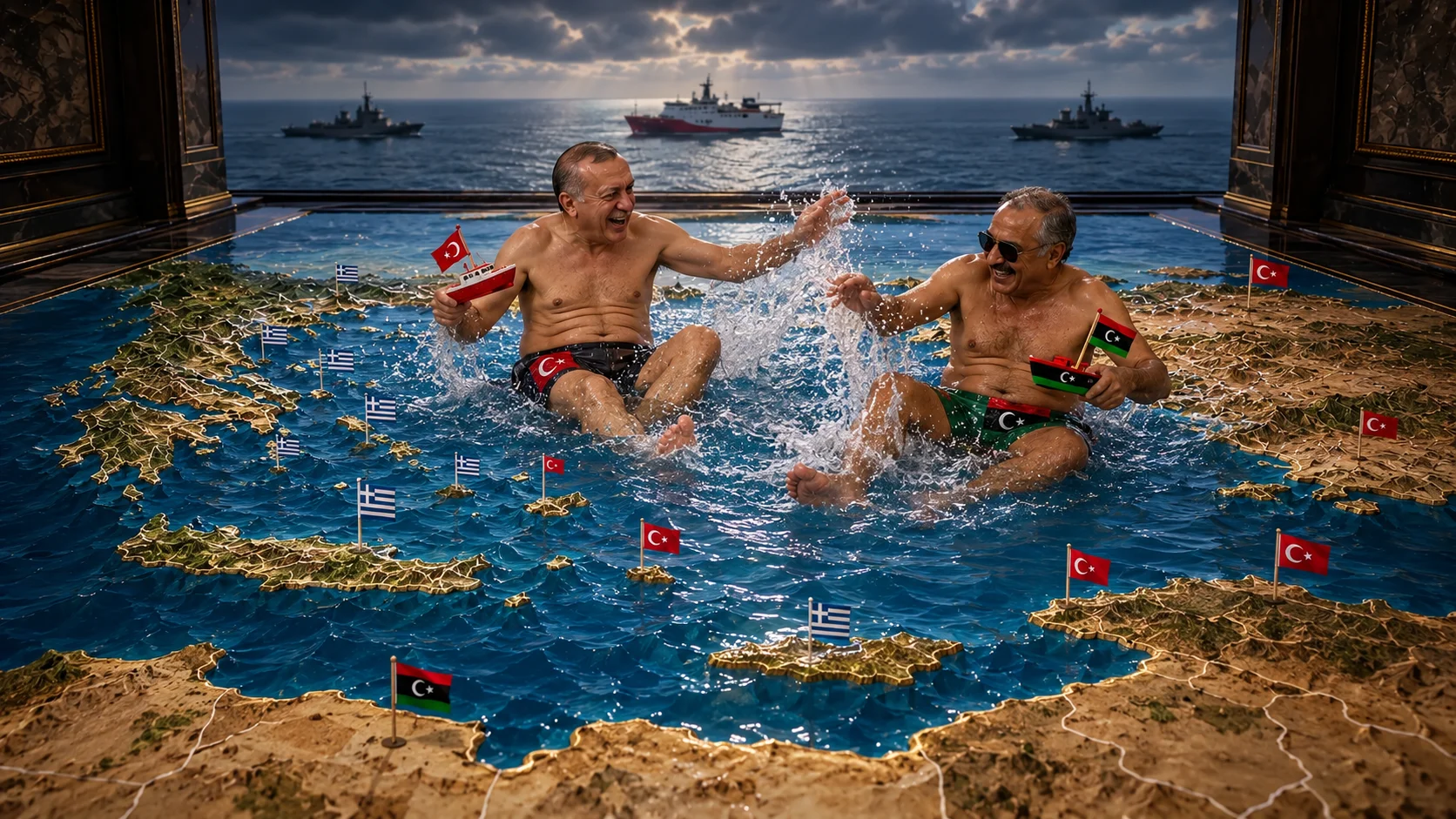
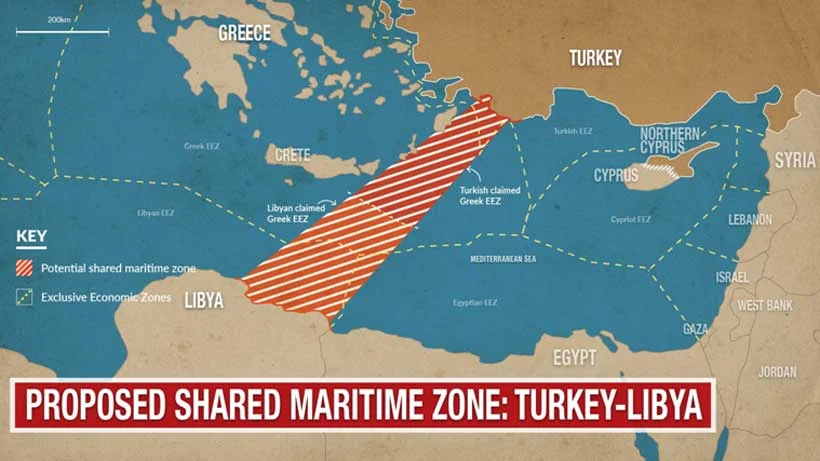
TRIPOLI/BENGHAZI — On October 20, 2026, Libya’s eastern House of Representatives unanimously approved Turkey’s 2019 maritime memorandum. The Tripoli government welcomed the vote too. For the first time since 2014, the country’s rival authorities have found a shared priority.
They don't have an unified constitution, a functioning central bank, or a single army. But a geography ignoring line on a map.
Until 2023, Turkey backed Tripoli against Haftar’s eastern forces. Ankara supplied drones, air-defence systems, and military advisers that helped reverse Haftar’s 2019 offensive on the capital. The eastern parliament responded by rejecting Turkey’s maritime agreement and severing political relations.
Then, in the spirit of geopolitical pragmatism, Turkey simply started befriending the other side as well. Intelligence chief İbrahim Kalın met Haftar in Benghazi. He met his son Saddam too.
By October 2026, the eastern parliament had not only reversed its rejection of the maritime memorandum — it unanimously approved it.
Impressive.
Ankara cultivated both sides of a country that cannot agree on who runs it, until both sides agreed on something Ankara wanted.
Under Article 121 of the UNCLOS, islands like Crete, Karpathos, Kastellorizo and Rhodes generate their own exclusive economic zones. Turkey and its Libyan partners ignore international law, drawing coloured lines between countries that don’t border each other. Crete is an unfortunate geographical misunderstanding.
Meanwhile, Chevron and Helleniq Energy are making progress. In February, they signed exploration agreements for four deep-water blocks south of the Peloponnese and Crete — under Greek licenses, under UNCLOS, with actual contracts and actual capital. ExxonMobil is planning exploratory drilling in Block 2. Real companies, real law, real money.
Turkey objected to the Chevron deal. Not because the blocks touch its continental shelf — Ankara itself admitted they do not — but because they somehow offend the spiritual integrity of the Turkish-Libyan colouring book.
Brussels responded with deep regret. European Commission President Ursula von der Leyen and European Council President António Costa issued a joint statement reaffirming solidarity with Greece and declaring the agreement “null and void.” They announced no new sanctions, no new measures, and no changes to an existing sanctions framework that has held exactly zero names since two individuals were briefly listed back in 2020.
The framework, established in 2019, was extended in December 2025 until November 2026 with an empty list. Brussels has a full cabinet of legal opinions and no way to enforce them.
Libya has not held a successful nationwide election. It lacks a unified military command. It still does not know who runs the country. The United Nations is still drafting frameworks for reunification. But when it comes to redrawing the Eastern Mediterranean around Erdogan's daydreams, they are game.
Good luck, lads!
Sources
Mohlo by vás zaujímať