The EU is securing a peaceful Arctic from the deck of a 35-year-old ship that almost wasn’t there
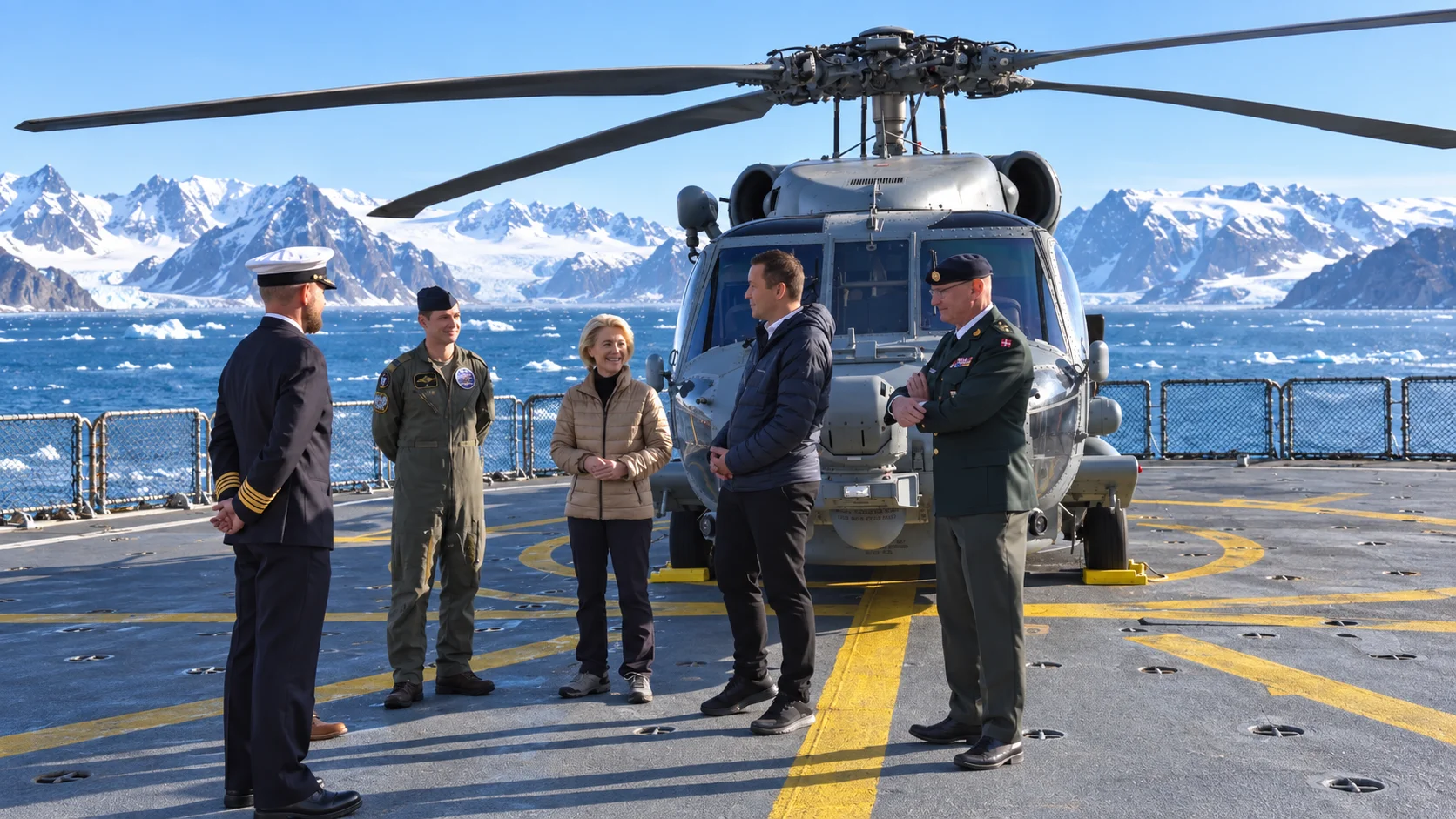
While Greenland stays out of the EU, it is a part of the Kingdom of Denmark which is responsible for its defence. Nevertheless, for almost three weeks in August, Denmark had none of its four large helicopter-carrying inspection ships there, despite a requirement to keep at least one available all year-round.
Why?
Three were in Denmark, probably immobilised by personnel shortages or technical faults.
Hvidbjørnen could not deploy because the navy lacked sailors.
Thetis was reassigned from its planned Greenland patrol to cover an exercise in Canada.
That left a gap in the rescue capability during peak hunting and tourism season.
Finally, by September, the ship was back in Nuuk and available for von der Leyen's boarding, for her to announce that a peaceful Arctic and Greenland’s security would be “front and centre of our upcoming EU Arctic Strategy this autumn.”
Meanwhile, The US has substantial military access under the 1951 defence agreement and already operates Pituffik Space Base in northwest Greenland - a military installation with radar, satellite-control facilities, an airfield and a port. Its radar tracks ballistic missiles, providing warning and information for missile defence. Its satellite facilities support American and allied spacecraft. Greenland is therefore already part of the infrastructure protecting North America.
There are economic interests alongside the military ones: minerals, potential energy resources and access to shipping routes.
For the United States, securing firmer, long-term control over access to Greenland is therefore of strategic interest.
An updated EU Arctic policy is expected to be adopted in autumn 2026. The EU already has an Arctic policy, adopted in October 2021, covering peaceful cooperation, climate action and sustainable development.
The Commission has also proposed €530 million for Greenland for 2028–2034 - a future allocation, rather than money available to address the current gaps.
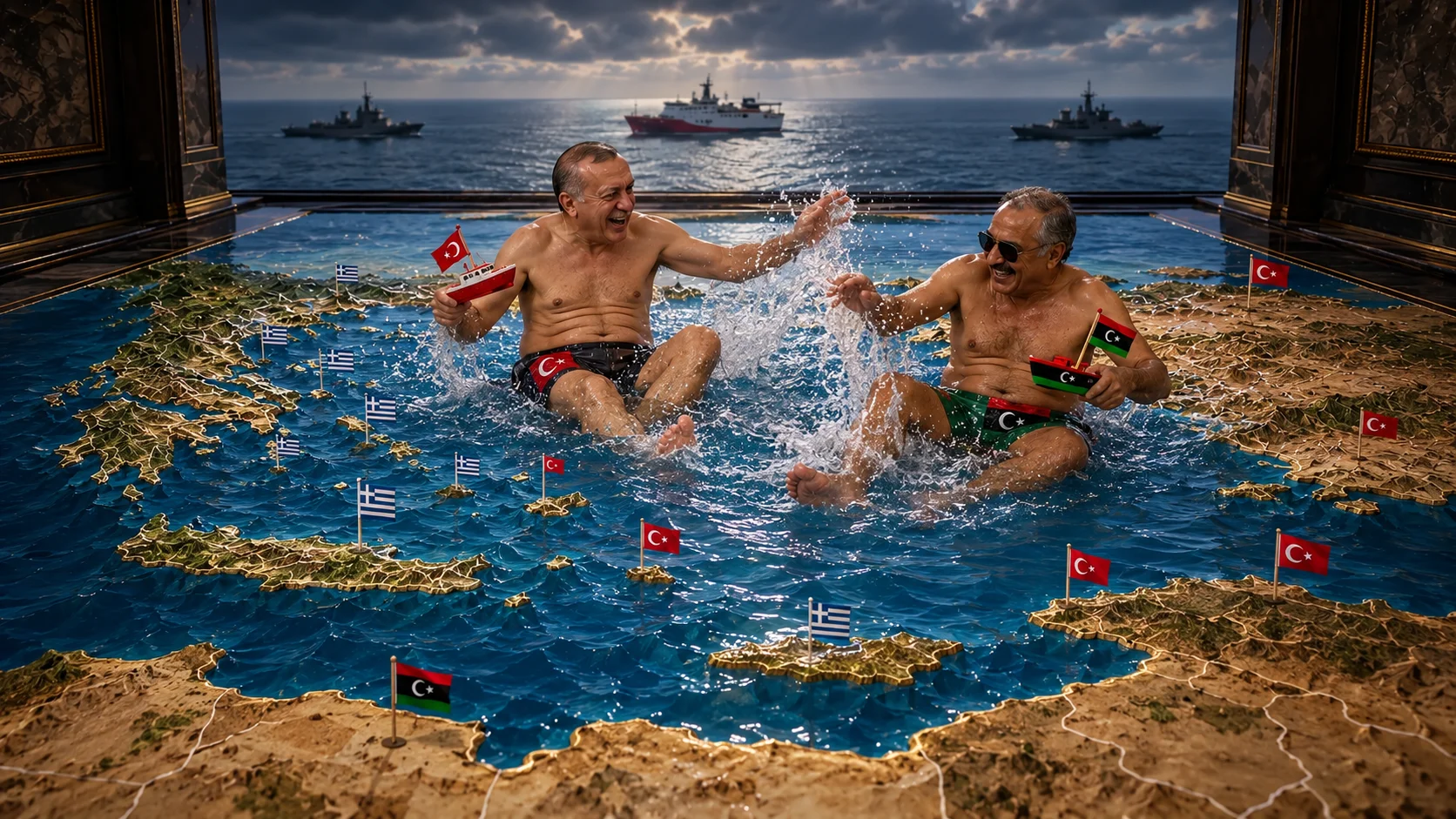
In this light, what does EU's commitment to "European security" mean for Greece, a member state of the EU and NATO, which is already dealing with recurring Turkish military pressure?
In the same week as Von der Leyen toured the Arctic, Greece reported 11 airspace violations involving a Turkish CN-235 and four drones, with the aircraft identified and intercepted.
The EU formally supports Greek and Cypriot sovereignty.
It has condemned Turkish activities, but also maintains a relationship with Turkey as a strategic partner.
What will the declared solidarity deliver when the violations continue?
It costs very little to be “also committed” once somebody else has provided a 35-year-old boat for pics.
Sources
Mohlo by vás zaujímať