The Great Firewall of Europe: How Brussels Plans to Turn Your “Voluntary” Bluesky Clone into a Government-Tied Digital Soul

Ah, mes chers Mitbürger, what a glorious moment for European sovereignty!
At the Cambridge Disinformation Summit in April 2026, the usual suspects finally said the quiet part out loud.
Robin Berjon, Deputy Director of the IPFS Foundation and tireless promoter of EuroSky, casually dropped that regulating American tech might eventually require “kinetic options.”
You know - military force.
One must be prepared to escalate all the way to tanks if the fines don’t work.
Magnifique.
The same continent that gave the world the Enlightenment is now debating whether to roll panzers into California because someone posted mean things about migration policy on X.
The vehicle for this glorious liberation?
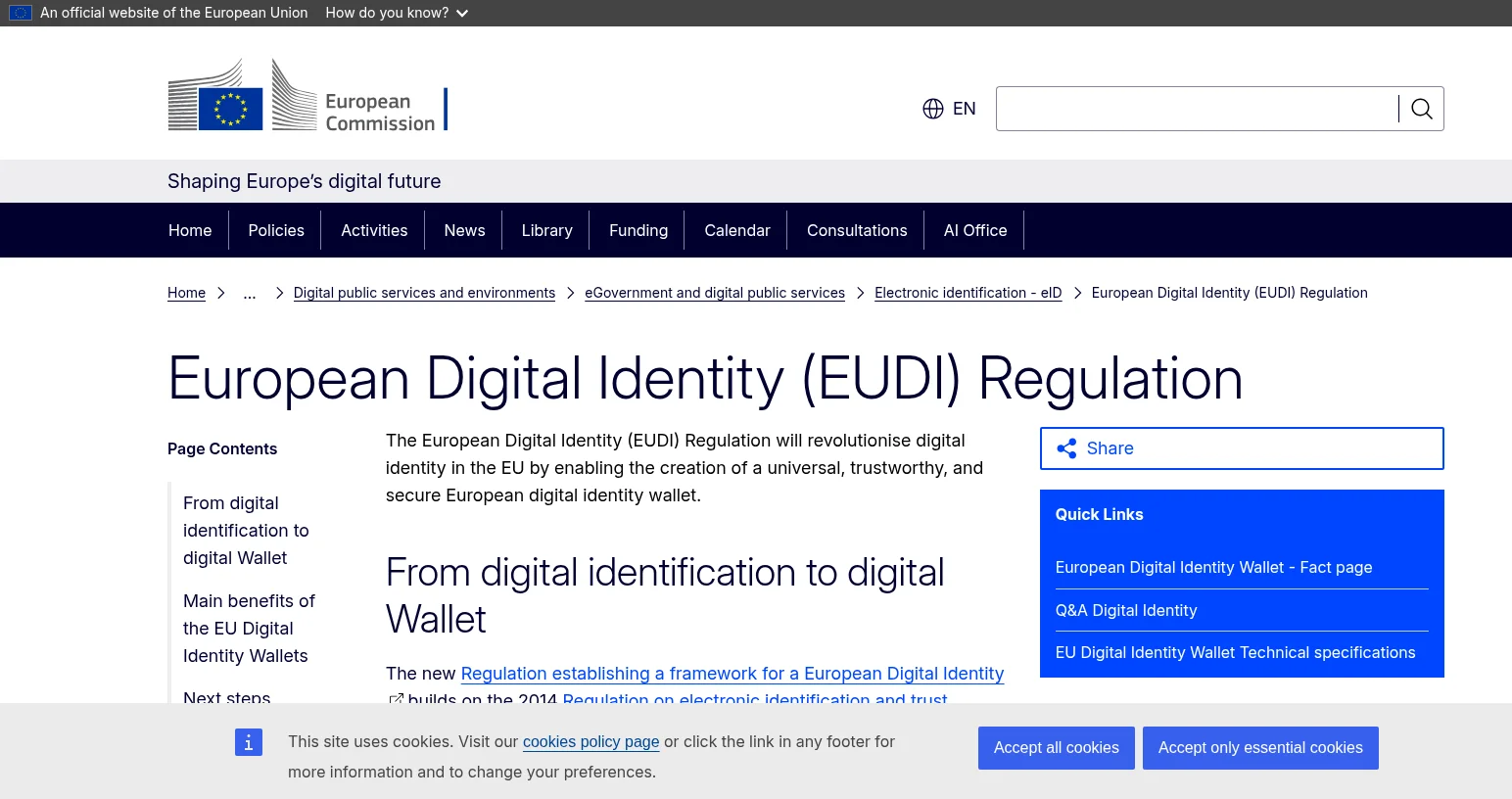
A shiny new EU-hosted social identity layer tied, one small technical step at a time, to your official European Digital Identity (EUDI) Wallet.
Phase One: EuroSky - Your New “Voluntary” EU Personal Data Server
Let’s start with the technical foundation - these people are deadly serious.
EuroSky is planned as a shared sovereign infrastructure.
Launched in April 2026, it gives every user a portable handle (@you.eurosky.social) and a Personal Data Server (PDS) hosted exclusively on EU soil - currently Hetzner’s data centre in Falkenstein, Germany.
All your posts, media, follows, likes, and preferences live under full EU jurisdiction.
Automatic GDPR + DSA compliance.
No more nasty American CLOUD Act subpoenas.
Migration is laughably easy.
Their open-source tool eu-haul (available in 24 languages) lets you export your entire Bluesky account in seven automated stages: repo export, blob transfer, PLC directory update, the works.
One click and your digital soul moves from US servers to German ones while remaining fully interoperable with the global decentralized standard AT Protocol (that powers Bluesky).
Berjon himself spent the Cambridge Summit urging everyone to “take fifteen minutes out of your day” and sign up. He calls EuroSky the “first stage in a multi-step process to replace American tech companies with European ones.”
And because they’re not monsters (yet), they’re building CoCoMo - the Commons for Content Moderation.
A shared, modular moderation relay that lets public broadcasters, researchers, and “trusted” entities layer European-values recommendation engines and label-based filtering on top of your PDS.
Geo-specific controls, audit logs, user appeals - all beautifully DSA-compliant and ready for public-interest governance.
Phase Two: The One-Small-Step Link to Your EUDI Wallet
Here’s where the fun really begins.
By 24 December 2026, every Member State must offer at least one EUDI Wallet (eIDAS 2.0).
It is “voluntary” for citizens - wink wink, in some countries one isn't able to log into ebanking without personally showing the passport every year - but regulated entities (banks, telecoms, Very Large Online Platforms) must accept - DEMAND - it for strong customer authentication by December 2027.
The wallet uses verifiable credentials, selective disclosure, OpenID4VC, SD-JWT, and device-bound secure elements (the phone’s Secure Enclave or Android Strongbox).
It already talks to the OS via the Wallet Unit API and device attestation protocols.
Technically, linking your EuroSky PDS to your EUDI Wallet is trivial.
Any AT Protocol client or moderation layer simply adds an EUDI authentication flow.
You tap your wallet → prove “I am a verified EU resident over 18” with zero-knowledge proofs → your PDS account gets a trusted badge.
EuroSky currently claims it has “no plans to require ID verification,” but it will “comply with legal requirements where introduced in Europe.” And those requirements are coming fast - DSA age-verification mandates, public-procurement rules, subsidies for “trusted” platforms.
Once linked, your social identity is no longer some cute decentralized handle. It is a government-verifiable digital citizen profile living on EU servers, moderated by European-values tools, and required everywhere.
Phase Three: Baking It Into Devices and OS - Goodbye Sideloading
This is the part that should make every European’s blood run cold.
EUDI services rely on device attestation.
Google’s Play Integrity API (or equivalent on iOS) checks that the phone is running a certified, non-rooted OS, that the app came from an official store, and that the device hasn’t been tampered with.
Sideloaded apps or custom ROMs (GrapheneOS, LineageOS, etc.) fail these checks.
Prototypes for age verification and high-assurance services already exclude them.
In the long-term outcome the Cambridge crowd is engineering:
- EuroSky-native clients and public-broadcaster apps will require EUDI for “trusted” features, age-appropriate feeds, or public subsidies.
- Banks, government portals, and eventually the social stack itself will treat non-attested devices as high-risk.
- Result? Sideloading becomes a de facto punishable offence - not by law (at first), but by losing access to your bank, your verified social account, your age-gated content, and any service that decides “verified EU identity” is mandatory for compliance. The OS-level prompts will be polite: “This device is not certified for secure services. Limited functionality.” You can still technically sideload… if you enjoy explaining yourself to your bank every month.
Rasmus Kleis Nielsen called this the “Airbus for the internet” model: state-backed champions, subsidies, procurement rules, and industrial policy to make the EU stack the path of least resistance while DSA fines and risk assessments make the American one increasingly annoying.
The Practical Repercussions
In two years, the average user won’t face a hard block on google.com or x.com.
The internet itself won’t be cut.
But:
- Your default social feed, search results, and recommendations will live on a EuroSky PDS with CoCoMo moderation layers prioritising “European values.”
- Unverified or global accounts get lower visibility, warnings, or reduced functionality.
- Tech-savvy users who insist on sideloading or US infrastructure will face friction, costs, and service refusals for anything tied to EUDI.
- Public broadcasters and trusted flaggers will shape what 450 million people see - all while claiming it’s still “open” and “interoperable.”
The crowning EU achievement?
The same one we’ve had for years: endless DSGVO cookie banners that achieve nothing except annoying everyone while our own systems still leak like sieves (remember the European Parliament breaches? The amateur-hour health apps? The “sovereign cloud” projects slower and leakier than AWS?).
Expect a wave of follow-up legislation: expanded DSA enforcement rules, mandatory “trusted platform” procurement guidelines for public institutions, subsidies under the “Airbus for the internet” industrial policy, and possible amendments to the eIDAS framework that make EUDI acceptance de facto mandatory for more private services. Age-verification mandates are already coming hard and fast.
Once enough citizens are on EuroSky PDS, it becomes politically easy to pass rules that further favour “European infrastructure” and penalise non-compliant foreign platforms.
This is what the EU sovereignty crowd wants.
A soft, bureaucratic, subsidy-drenched, ID-linked garden where the default is compliance, the path of least resistance is EuroSky + EUDI, and the price of digital freedom is being treated as a second-class citizen in your own continent.
Similar tendencies in the US now
before anyone says “this is just crazy EU stuff,” similar tendencies are appearing in the US too — age-verification bills, digital ID grants, and “kid safety” proposals that quietly push for stronger identity layers and platform compliance. The difference is that in Europe this is wrapped in grand “digital sovereignty” language and backed by industrial policy money. The direction is the same.
~~
Solutions?
Many freedom-loving Europeans will end up with two phones: a clean, attested “state phone” (pre-loaded with EUDI, EuroSky clients, and public-broadcaster apps) for banking, government services, age-gated content and subsidies - and a second, dirty phone for actually accessing the uncensored internet.
If the OS still allows it, that is. Sideloading, custom ROMs or even Linux-based phones (like Ubuntu Touch or postmarketOS) will work on the second device… until more services simply refuse to talk to non-attested hardware.
~~
Me?
I’ll keep my data on boring, reliable American servers that actually work - for now, because I trust Google/Darpa better than the EU Commission.
Vive la liberté - the real one.
Now if you’ll excuse me, I have a perfectly functional X feed to refresh on my non-attested, fully sideloaded Chinese Huawei HarmonyOS 6.
This is the European future and it's not even funny: https://digital-strategy.ec.europa.eu/en/policies/eudi-regulation
Prost.
Disclaimer: This is a satirical piece. vlgr is not a real news outlet - it's parody and exaggeration for entertainment purposes only
You might also like