Trump Fails to Deliver on Power Plant and Bridge Day, Leaving Some Iranian Factions Disappointed
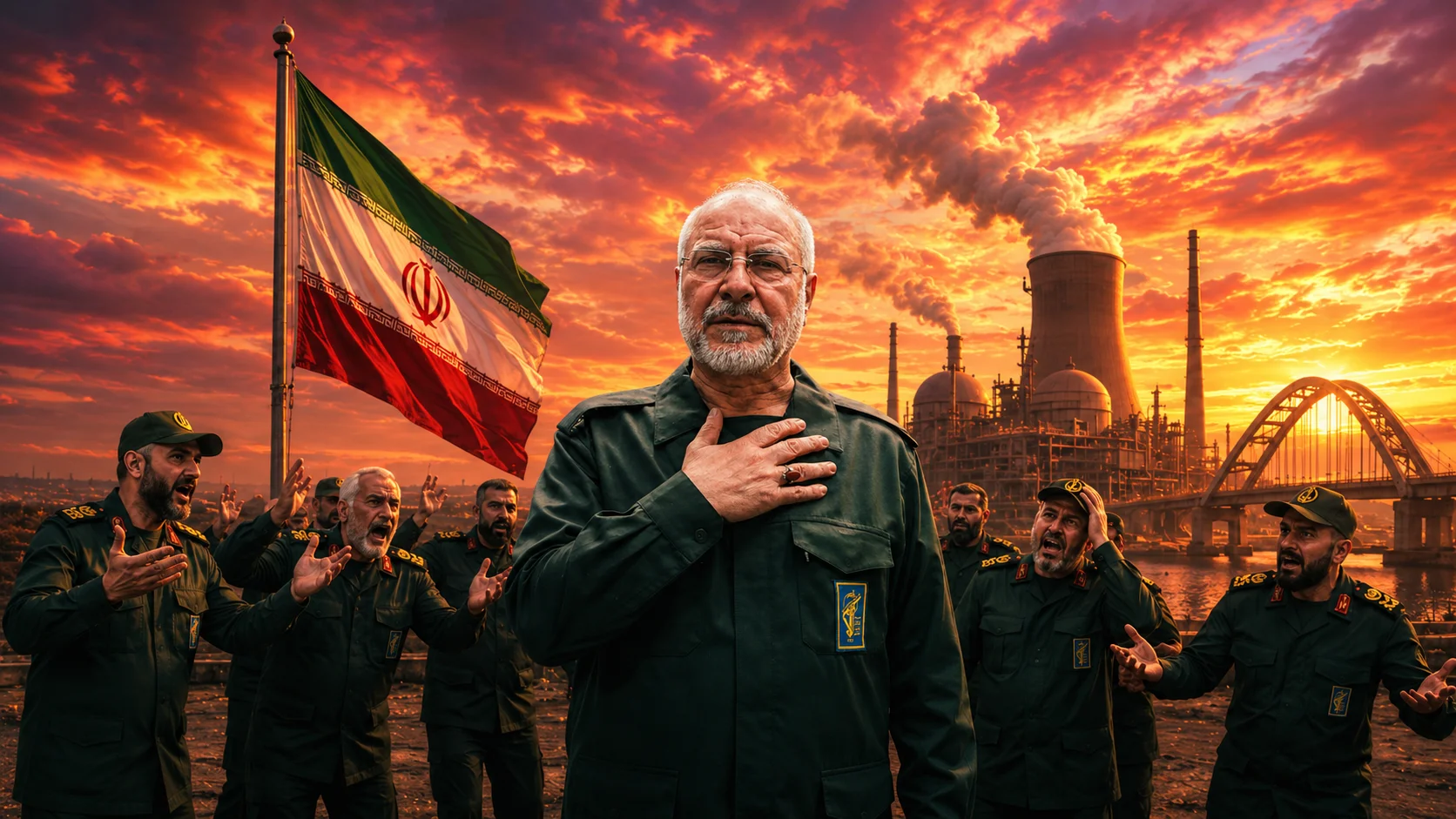
While negotiators have been describing the lack of attacks as a successful outcome of recent diplomacy, other elements within the regime have made it clear they were hoping for a different result.
In a pointed move, the Islamic Revolutionary Guard Corps has announced it will proceed with scheduled military exercises around the newly reconstructed Strait Of Hormuz as originally planned, describing them as “routine defensive preparations that were never dependent on external participation.”
Hardline factions have gone further.
Several parliamentary committees aligned against the recent agreement have called for an immediate review of all concessions made during negotiations, arguing that the absence of American action has left Iran in an “unclear strategic position.”
Particular annoyance has been directed at Parliament Speaker Mohammad-Bagher Ghalibaf (64). In what appears to be a coordinated response, several state-linked media outlets have begun running archival footage of Ghalibaf praising the value of dialogue, accompanied by on-screen captions reminding viewers that “words are not missiles.”
The message serves as a reminder that Ghalibaf’s willingness to negotiate with the Americans does not represent any break from the regime’s established path. His diplomacy remains strictly transactional: useful for extracting money, sanctions relief, and the occasional photo opportunity, but not for altering the system that keeps the current power structure in place.
For Ghalibaf, the failed American appearance landed on an especially tender spot. Few men in Tehran have spent more time preparing to look presidential while repeatedly failing to actually become president. Commander, police chief, mayor, speaker, negotiator, national crisis manager: his career has become a long audition for a role the system keeps handing to someone else.
This is perhaps why the latest diplomatic confusion has irritated his rivals so deeply. Ghalibaf was supposed to be the man who could manage the Americans, calm the markets, discipline parliament, and look severe in front of a flag. Instead, he once again found himself in his natural habitat: close to power, near a camera, and not quite winning.
That failure, however, does not make him harmless. Like his predecessors, he continues to support the same network of proxies, including the financing of Hezbollah, while his long record as a former IRGC commander and police chief during periods of harsh crackdowns shows he has no intention of easing the regime’s grip at home. Ghalibaf may be the regime’s permanent understudy, but he remains fully committed to the production.
In a separate but related development, some officials have begun floating the idea of formally inviting American forces to inspect certain infrastructure sites anyway, “in the spirit of transparency and mutual understanding.”
The proposal, which has not been officially confirmed, is reportedly being discussed as a way to ensure that the Americans do not feel they missed their opportunity entirely.
For now, Power Plant and Bridge Day has passed without the expected guest appearance. Different parts of the regime continue to disagree on whether this should be treated as a diplomatic victory, a missed opportunity, or simply a scheduling issue that may be revisited at a later date.
~~
Quick Bio of Mohammad-Bagher Ghalibaf
- Born: August 23, 1961 (age 64) in Torqabeh, near Mashhad, northeastern Iran.
- Current role: Speaker of Iran's Parliament (Majlis) since 2020 (reelected in May 2026). He's also Iran's lead negotiator in the recent US ceasefire/talks.
Career Path (The Classic Regime Insider Track)
He rose through the system with a strong military/security background:
- IRGC military career: Joined the Basij and IRGC during/after the 1979 Revolution. Fought in the Iran-Iraq War in the 1980s, rising fast to become a commander (Imam Reza Brigade, then 5th Nasr Division). Later commanded the IRGC Air Force (1997–2000).
- Police chief: Head of Iran's national police/law enforcement (2000–2005). This period is remembered for harsh crackdowns on protesters, journalists, and intellectuals, plus strict morality/hijab enforcement.
- Mayor of Tehran (2005–2017): Took over from Mahmoud Ahmadinejad. Presented himself as a technocratic manager who got things done, but his tenure was dogged by corruption scandals (including allegations of luxury properties abroad).
- Presidential ambitions: Ran for president several times (including 2013 and 2017) but never won.
- Parliament Speaker: Elected in 2020 after conservatives regained control. Has held the position since, even as factions (like the hardline Paydari Front) criticize him.
He has close ties to the Supreme Leader's office (reportedly related by marriage to Ali Khamenei's family and close to Mojtaba Khamenei) and maintains strong IRGC connections. He's often described as a bridge between IRGC pragmatists and more fundamentalist politicians.
Reputation & Style
- Pragmatic hardliner: Deeply embedded in the revolutionary system (IRGC brigadier general background, speaks the usual "Death to America" and resistance axis language). At the same time, he's willing to cut deals and negotiate when it serves regime survival — which is exactly why he's leading the current US talks.
- Ambitious survivor: Keeps landing on his feet despite scandals and political attacks. Known for top-down management and political maneuvering.
- In the 2026 context: After the war and leadership losses (including Ali Khamenei's death), he emerged as one of the most important surviving power brokers.
Sources
You might also like