Turkey Has a Price. Was Syria the Deal, the US the Dealmaker and the EU the Financier?
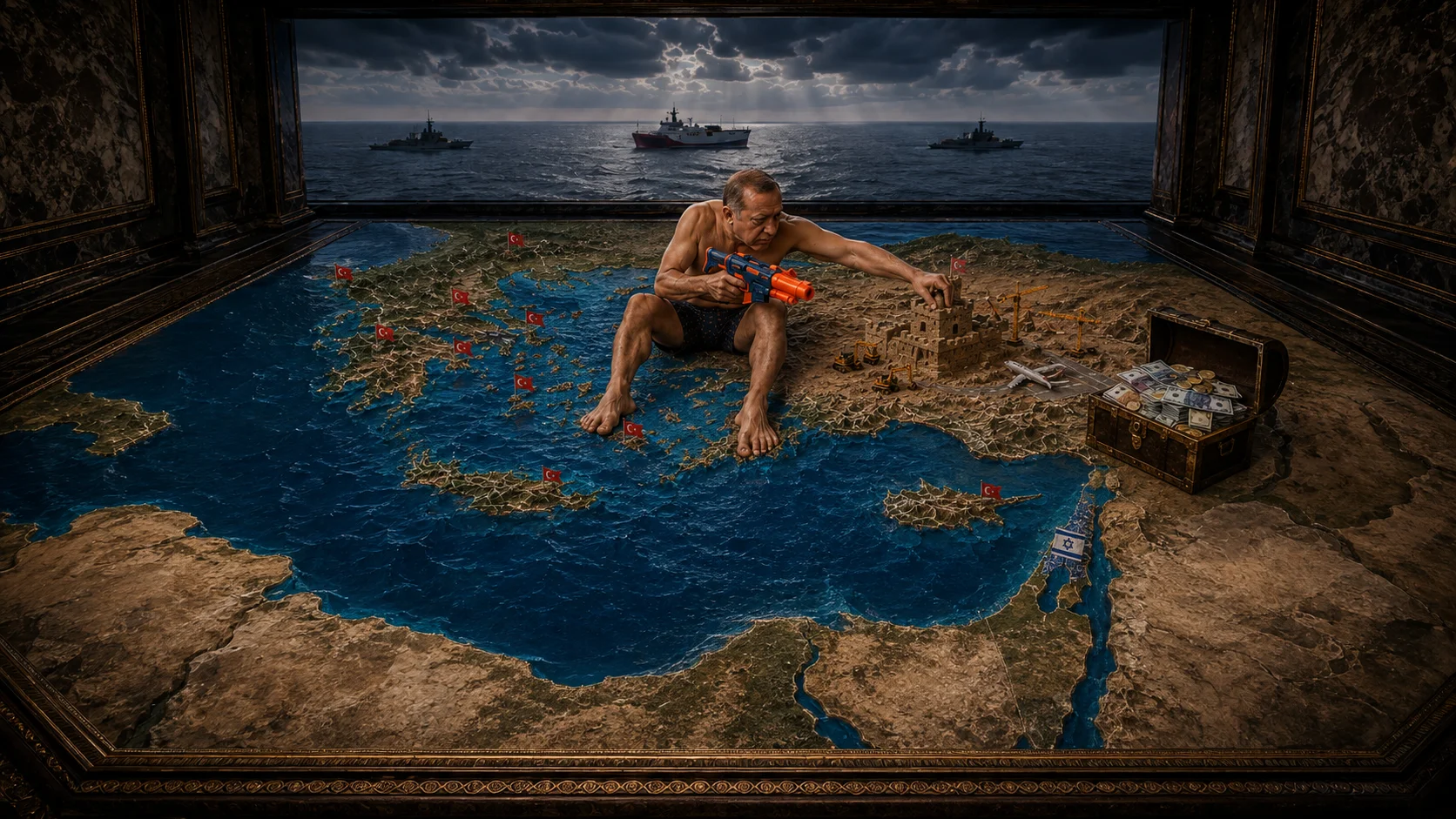
Recep Tayyip Erdoğan spent years presenting himself as one of Israel’s loudest enemies in the region. He accused Benjamin Netanyahu of atrocities, embraced the Palestinian cause, broke commercial ties and routinely produced vitriolic speeches.
After Israel and the United States go to war with Iran in February 2026, Erdoğan responds exactly as one might expect. He condemns Israel. He condemns the American attacks. What he does not do is join Iran.
Why not, a concerned reader might ask?
The answer is in the spring and summer of 2025, when Washington, Riyadh and Ankara built the post-Assad order that Turkey now has every reason not to set on fire.
- On 29 April 2025 the U.S. Senate confirms Tom Barrack as ambassador to Turkey. He lands in Ankara on 5 May. On 13 May, in Riyadh, Trump announces that he will lift U.S. sanctions on Syria, because Mohammed bin Salman and Recep Tayyip Erdoğan asked him to.
- On 14 May Trump meets Ahmed al-Sharaa in the Saudi capital; Erdoğan is on the call. The same day Barrack presents his credentials in Ankara.
- On 23 May 2025 Barrack adds a second title: special envoy for Syria. Six days later, on 29 May, Damascus signs the roughly $7 billion electricity package. The consortium is led by Qatar’s UCC and includes Turkey’s Kalyon and Cengiz, with a U.S. partner, Power International. Barrack is at the ceremony. He raises the American flag over the old ambassador’s residence in Damascus the same day.
- On 6 August 2025 Syria signs a memorandum for the roughly $4 billion redevelopment of Damascus International Airport. Kalyon and Cengiz are in again, this time with UCC, TAV and U.S. Assets Investments. Barrack is there again. Final concession papers are signed in November 2025.
By the time the Iran war starts on 28 February 2026, Turkish companies are already inside the two largest civilian projects in the new Syria, U.S. sanctions are coming down, Gulf and European money is moving, and Ankara has influence in Damascus that it spent a decade trying to obtain.
On 24 June 2026, in the Oval Office with NATO Secretary-General Mark Rutte, two weeks before the NATO summit in Ankara, Trump supplies his own version of why Erdoğan stayed out:
“He was a prime candidate to go into the war with Iran, maybe on the Iran side, because he’s not a big fan of Israel, as you know. And I asked him to stay out. He stayed out.”
At 20 percent of a $216 billion reconstruction economy, Turkish firms would participate in more than $43 billion of activity.
Add future trade, transport corridors, electricity integration, banking opportunities.
There is influence over Damascus, the Kurdish question, and the possibility that millions of Syrian refugees currently living in Turkey might eventually return home.
The World Bank estimated Syria's total reconstruction requirements at around $216 billion. So who Is Actually Paying for Erdoğan's Syrian Victory?
The United States put almost no reconstruction money on the table, they only opened the door.
It costs Washington almost nothing in appropriated dollars.
American public money in this phase is humanitarian leftovers and embassy plumbing. After years as the largest wartime relief donor - on the order of $17 billion across the regional crisis - Washington cut hard in 2025.
The rest is in the low hundreds of millions: relief, a possible $50 million-a-year stabilisation fund, tens of millions to put diplomats back in a building, train-and-equip money for vetted forces. There is no American Marshall Plan for Homs.
Private investors cannot make much money from a desolate country. Fortunately for investors, governments have taxpayers.
Europe is the opposite instrument.
Since 2011 the EU and the member states have put €38–41 billion into Syrians in Syria and in Turkey, Lebanon, Jordan and Iraq. In March 2025, at Brussels IX, the room pledged €5.8 billion; the EU and the member states were about €3.4 billion of it; the Commission’s own headline was nearly €2.5 billion for 2025–2026.
Then the bilateral drip: a €175 million recovery package, more than €424 million in one Commission accounting, €620 million announced in Damascus in January 2026 for 2026–2027, EIB loan talk in the billions. This is tax money.
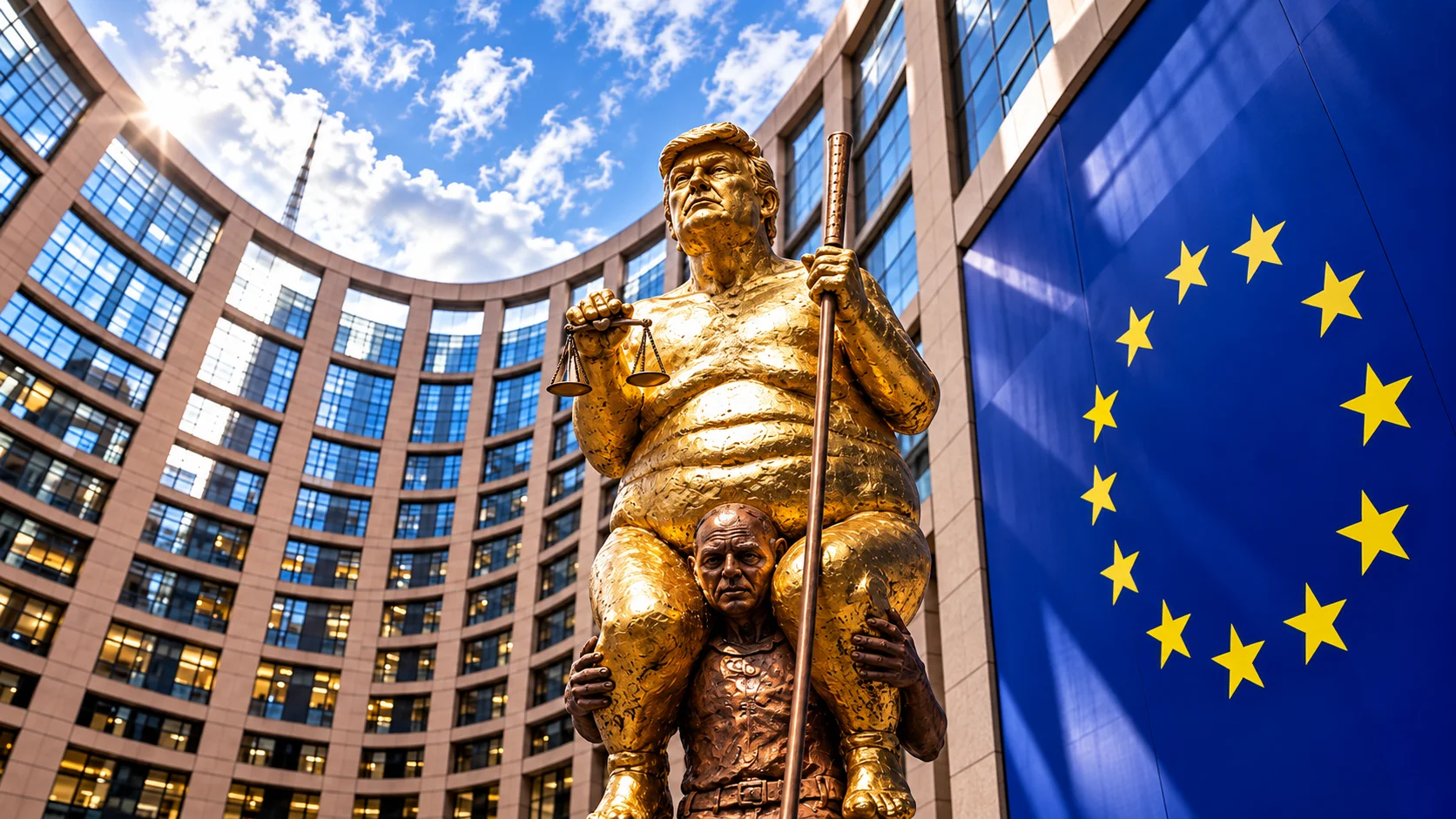
Why does Brussels keep writing the cheque?
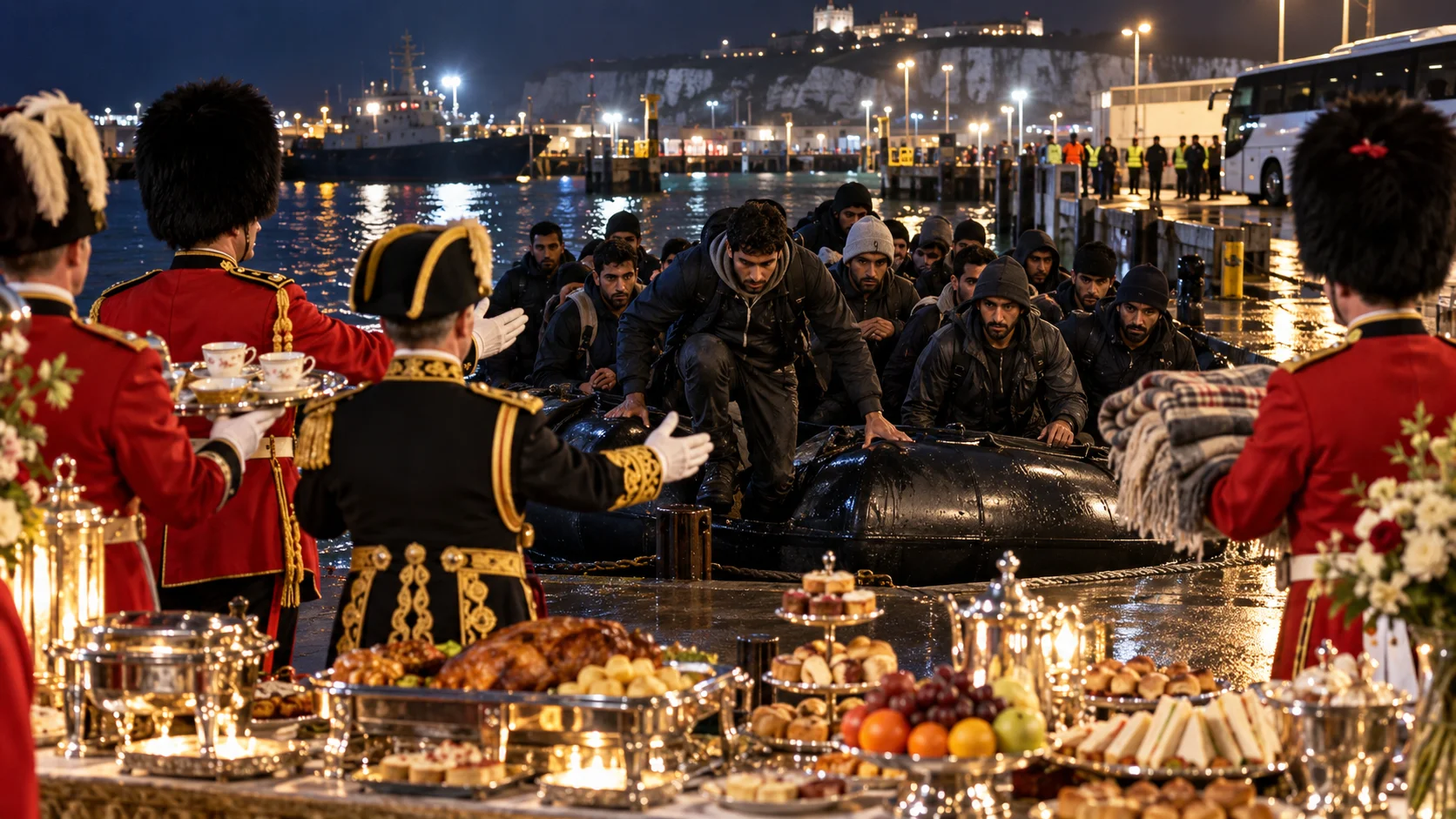
Because it is already on the hook. A dark Syria produces boats, asylum claims and another argument about Turkey’s border.
Turkey still hosts some 2.26 million Syrians. That is Erdoğan’s leverage over Europe and Europe’s reason for paying. The fact, that Assad was Moscow’s client, adds to it.
The Gulf is the third wallet, and it is not a taxpayer in the European sense.
Qatar is inside the projects that have contractors’ names on them: the $7 billion power consortium, the $4 billion airport, reported salary support for the new state’s payroll.
Saudi Arabia has the widest pledge book - $6.4 billion at the July 2025 Damascus forum, packages for Aleppo’s airports, fibre, a joint airline - and, with Qatar, the $15.5 million World Bank arrears payment that reopened IDA.
The UAE has the DP World at Tartus for $800 million.
Al-Sharaa has claimed $28 billion of “investments” in a single half-year.
All of it depends on the American waiver.
The calculation in Washington and Brussels was to give Turkey the southern file.
Trump makes the deal. European taxpayers pay the bill because they want the Syrians to go home. Gulf balance sheets because they want Syria out of Iran’s system and inside theirs. Turkish firms take the contracts next door.
In exchange, Erdoğan stays inside the reservation. He does not walk into a war with Israel and the United States. He does not set fire to NATO’s south-eastern edge. He takes the win and he shuts up.
That is not what happened.
On 18 August 2026 Israel bombed Abu al-Duhur, a Syrian airbase near the Turkish border, on the claim that Turkish forces were about to deploy there. Tom Barrack, still posted to Erdoğan and to Syria at the same time, said U.S. intelligence did not see the deployment Israel described.
Three days later Turkey asked Interpol for a red notice on Netanyahu. Netanyahu’s office answered that Erdoğan is an antisemitic dictator who massacres Kurds, hosts Hamas, occupies half of Cyprus, and is now extending the fight into Syria. Hakan Fidan tells anyone who will listen that the Greece–Cyprus–Israel security triangle is aimed at Turkey. This is not a government that took Damascus and went quiet. Syria became another runway on which to collide with Israel.
The East Mediterranean file was never part of the invoice, and it was never closed.
In March 2026 Turkey put F-16s and air defences into occupied northern Cyprus.
In June, jets operating from the occupied side harassed aircraft carrying the Greek, French and Dutch defence ministers into the Republic of Cyprus.
On 20 July Erdogan marked the anniversary of 1974 the way he always does: the motherland will not leave the Turkish Cypriots alone. Blue Homeland is being written into legislation, not retired as a slogan from a previous crisis.
At the July 2026 NATO summit in Ankara Erdoğan proposed Aegean talks and waved the casus belli away as something most Turks have never heard of. Mitsotakis put the casus belli and the F-35s back on the table. Erdoğan told him not to follow Netanyahu in blocking American aircraft for Turkey.
The maritime claims that overlap Greek and Cypriot water are unchanged.
The deal bought one thing and only one thing - the Turkish absence from a war with Iran. What it did not buy is a Turkey that stops treating Israel as an enemy, Cyprus as unfinished business, and the Aegean as a place for the own expansion.
That is a strategic error, if Trump made one.
The error is the assumption that a revisionist power, once paid, becomes a status-quo ally.
Sources
- reuters.com
- dailysabah.com
- turkishminute.com
- timesofisrael.com
- jpost.com
- nytimes.com
- turkishpress.com
- dailysabah.com
- reuters.com
- dailysabah.com
- whitecase.com
- worldbank.org
- worldbank.org
- sana.sy
- eeas.europa.eu
- aljazeera.com
- euractiv.com
- congress.gov
- fts.unocha.org
- foreignassistance.gov
- nytimes.com
- reuters.com
- arabianbusiness.com
- timesofisrael.com
- reuters.com
- arabnews.com
- cyprus-mail.com
- hurriyetdailynews.com
- ekathimerini.com
- tovima.com
- ekathimerini.com
- fdd.org
Mohlo by vás zaujímať