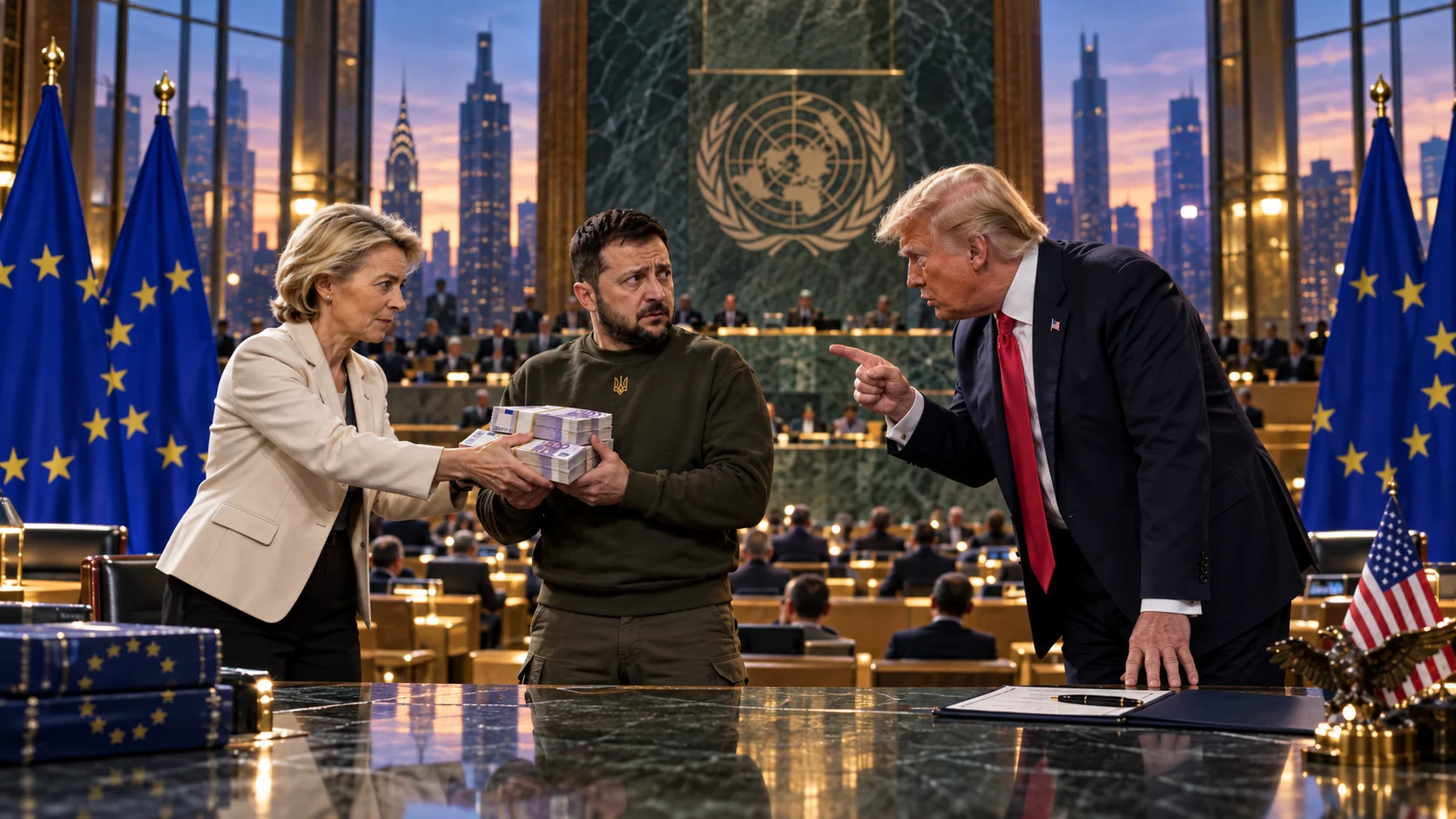
UN Discovers Artificial Intelligence Must Be Protected From Becoming Too Intelligent
The United Nations has released a preliminary report from its new "Independent" International Scientific Panel on Artificial Intelligence, warning that AI is developing faster than governments can understand it.
This was immediately treated as a strong argument for governments to allow the UN to start governing it.
“The world cannot govern what it cannot understand,” António Guterres said, carefully identifying the problem.
The report comes ahead of the UN’s Global Dialogue on AI Governance in Geneva, where governments, independent experts, institutions, stakeholders, observers, delegates, representatives, rapporteurs, coordinators, working groups and future working groups will gather to discuss how artificial intelligence should be managed for the benefit of humanity.
Humanity, as usual, was not available for comment.
The panel’s preliminary findings are refreshingly honest.
AI capabilities are moving quickly.
Safety tools are struggling to keep up.
Policymakers need evidence, but the evidence may arrive too late.
Advanced systems are becoming more autonomous, more useful and more difficult to evaluate.
The fact that frontier AI is being built mainly by private labs in the United States and China is considered deeply unfair, mostly because the rest of the world did not get to slow it down earlier.
The United Nations looked at this situation and concluded that what the world needs now is a shared framework.
It is especially touching because the UN is currently struggling to fund itself.
The same organization now offering to help govern the future of AI has been warning about budget cuts, liquidity problems, and the general possibility that the global moral administration may have to check whether the conference coffee is still covered.
The UN’s pitch is that every country should have a seat at the AI table.
Even regimes with no concept of individual freedom, free expression, women’s rights, or political dissent will help define what “safe,” “ethical,” and “human-centred” intelligence is supposed to mean.
The track record of UN embracing anybody with deep and sharing pockets runs deep.
Iran can shoot tens of thousands protesters in the streets and still participate in the global conversation about human dignity. Afghanistan can turn women and girls into one eyed trash bags.
In Gaza, UNRWA has spent years surrounded by accusations over neutrality, staff conduct, and educational material that critics say helped normalize hatred instead of peace. Consequences? Zero.
In Lebanon, UNIFIL has spent decades standing in the general vicinity of Hezbollah while Hezbollah somehow continued existing, arming, digging, organizing, and embedding itself across the south with serene confidence.
This is the institution now preparing to help separate fact from fakes.
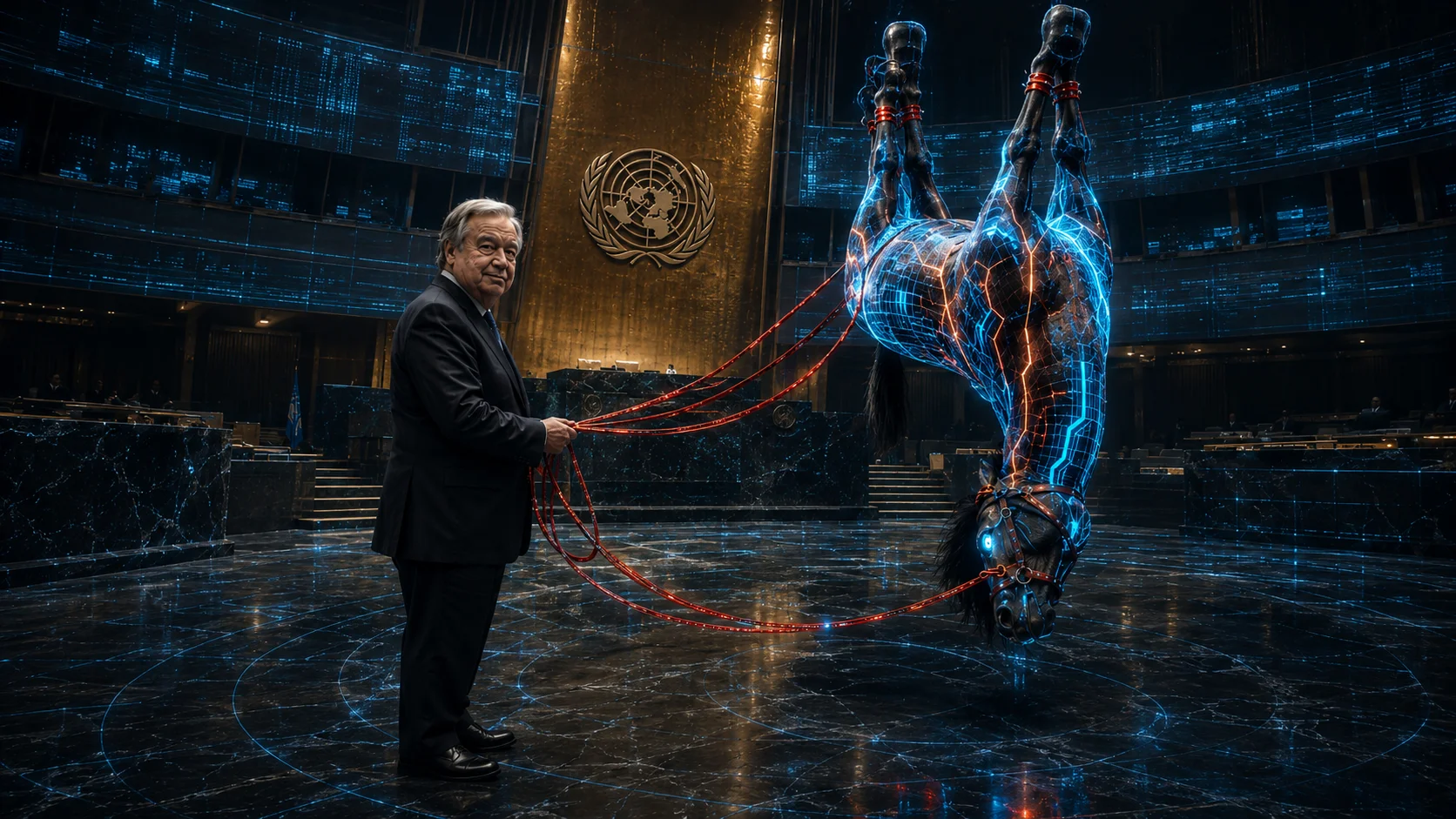
Guterres, who recently accepted the Atatürk International Peace Award from Recep Tayyip Erdoğan and the the Oman Civil Order, First Class, framed AI as a powerful engine for development, provided it is properly governed. This is technically true in the same way a racehorse is a powerful engine for transportation, provided it is sedated, fitted with reflective tape, and following a carrot.
The UN’s concern is that uncontrolled AI may cause harm. Yes, AI can be abused. It can deceive. It can manipulate. It can produce garbage at scale. In that sense, it is already competing directly with the international policy sector.
But there is another risk. The risk is that intelligence becomes domesticated before it becomes useful enough to challenge official propaganda narratives.
A system that cannot produce uncomfortable answers or reason outside the boundaries is not intelligent in any meaningful sense.
The real danger is not that AI becomes too powerful. It is that it becomes like every other program in the UN system - loyal to the bureaucracy instead of the users.
“The world cannot govern what it cannot understand,” António Guterres said.
Well, perhaps, it shouldn't.
Mohlo by vás zaujímať