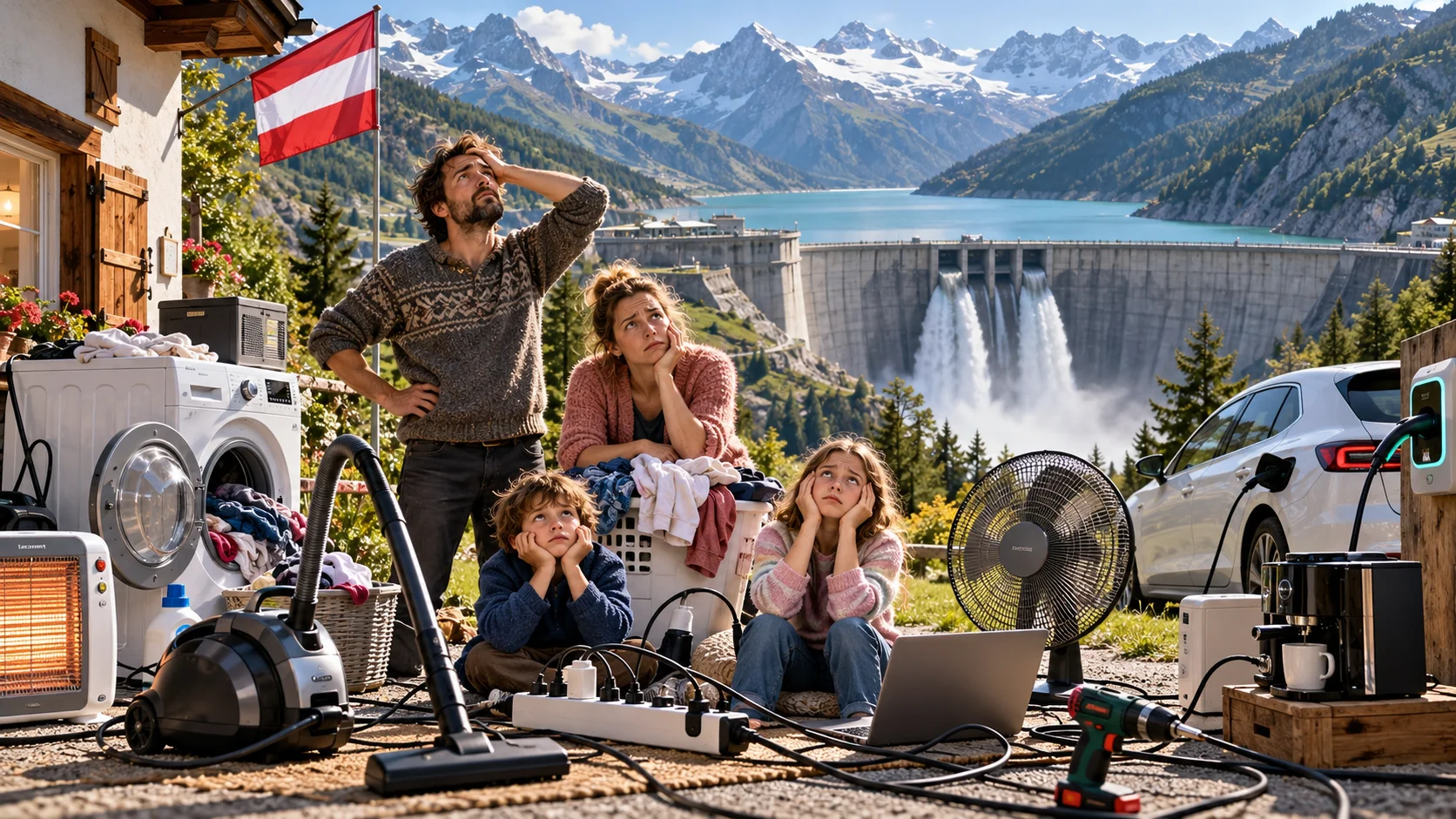
OpenAI Solves a Century-Old Math Problem Using a Method Previously Known as “The Customer”
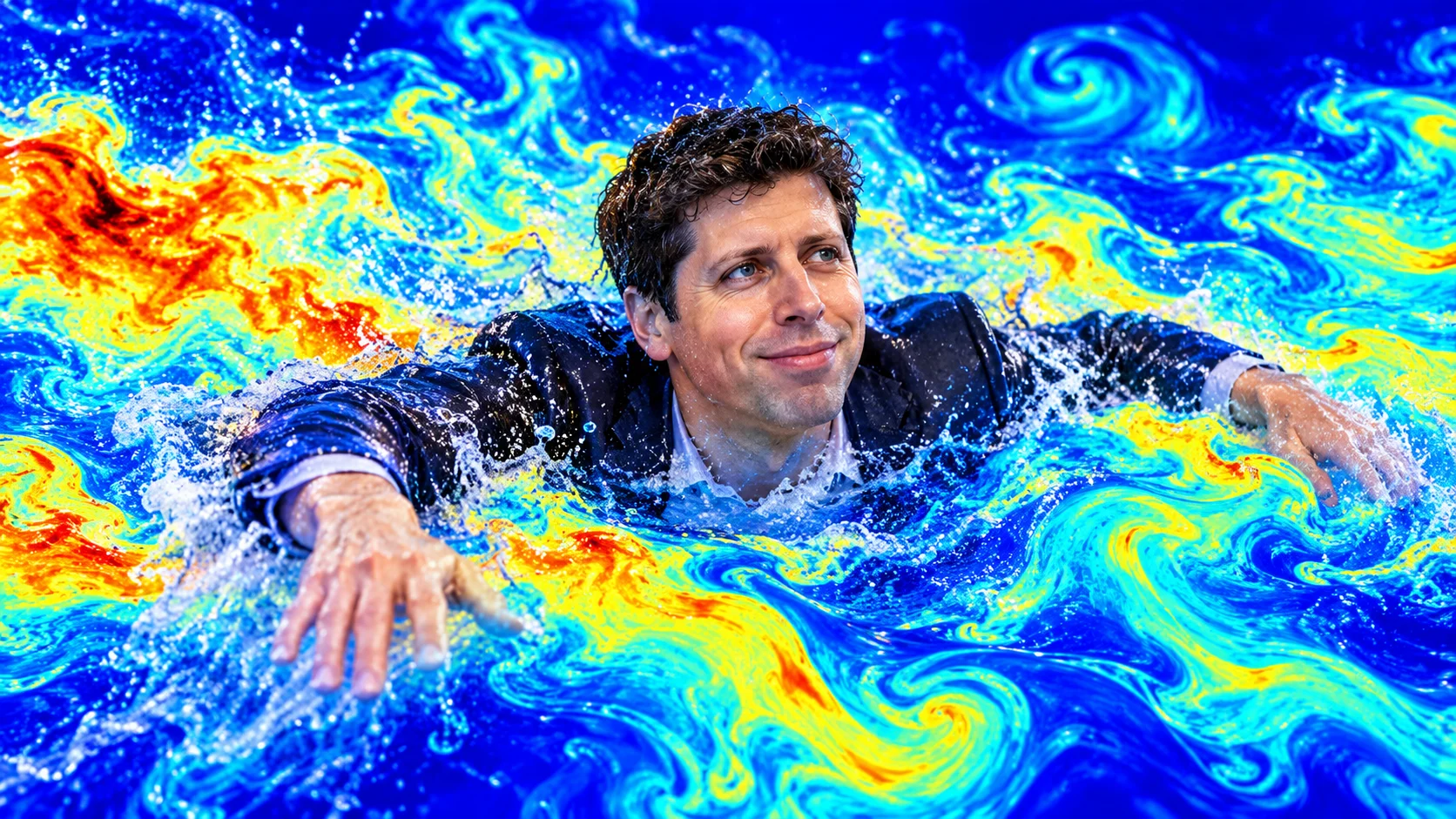
Mathematicians Tristan Buckmaster and Levent Alpöge had been working on a longstanding question about the Navier–Stokes equations describing how liquids and gases move: can an initially smooth flow develop extreme behaviour that makes the mathematics break down?
The equations have been used since the nineteenth century. Whether their solutions always remain smooth in three dimensions has resisted mathematicians for roughly ninety years.”
The Clay Mathematics Institute put the problem on its Millennium Prize list in 2000. One million dollars for a proof that smooth solutions always exist, or a counter-example showing they can break.
Buckmaster and Alpöge have been feeding their unpublished work into OpenAI’s Codex.
Coincidentally, on September 8, 2026, OpenAI announced that an internal AI system had produced a solution.
It took about 88 hours and a next-generation model “significantly more capable than GPT-6 Astra,” not released to the public, coordinating on the order of 10,000 agents.
By their own pricing, the compute was worth roughly $10–15 million if a customer had bought the same run.
OpenAI published a write-up and a Lean formalisation, and said it would not claim the prize.
An initially smooth fluid at rest, driven by a smooth external force, can develop a singularity in finite time while keeping finite energy - Clay’s breakdown statements C and D. OpenAI also claims blowup for unforced Euler.
OpenAI didn't post unforced Navier–Stokes, the version most people mean when they say “the problem.”
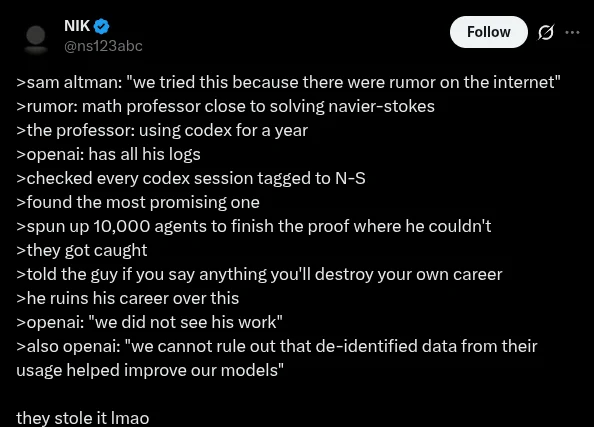
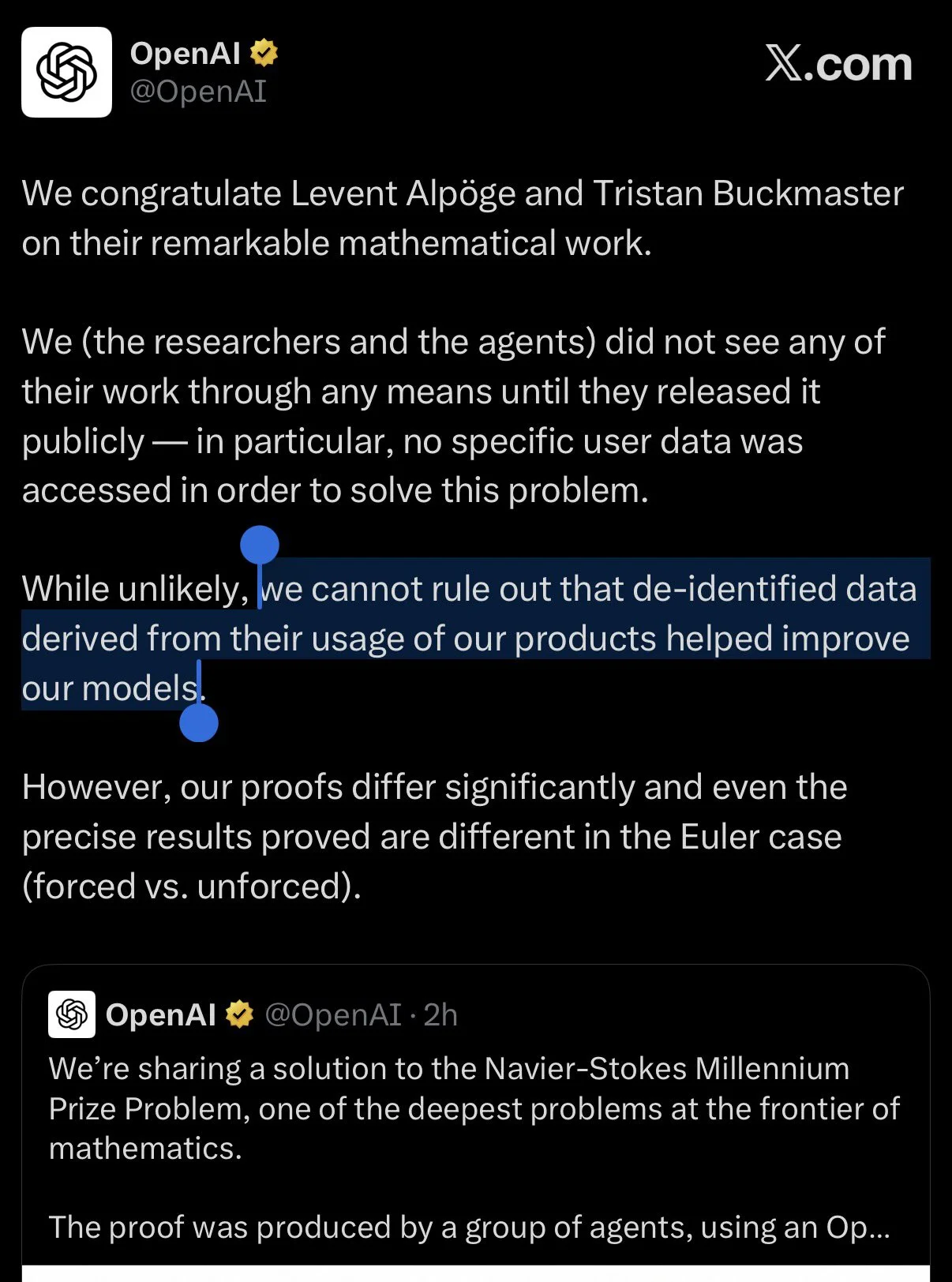
OpenAI said its researchers and agents did not look at Buckmaster and Alpöge’s work until it was public, and that no specific user data was accessed to solve the problem, but they could not rule out that “de-identified data derived from their usage of our products helped improve our models.”
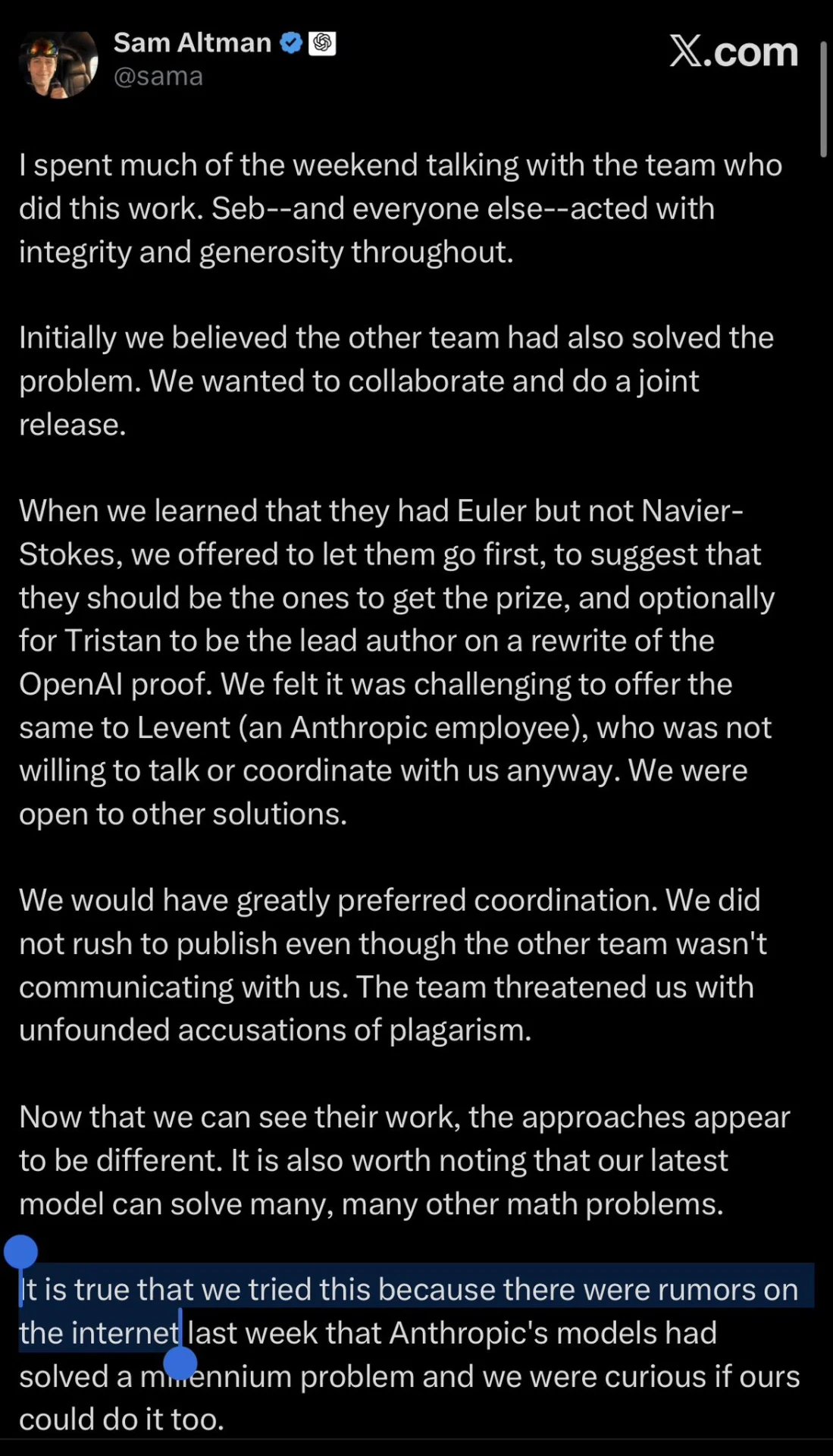
Sam Altman said the team tried the problem because there were rumours on the internet that Anthropic’s models had solved a Millennium problem, and they were curious whether theirs could too. Alpöge works at Anthropic.
Credit talks followed. OpenAI says it first thought Buckmaster and Alpöge had solved the prize problem, offered a joint release, then offered to let Buckmaster go first and be lead author on a rewrite of OpenAI’s proof.
Alpöge’s job at Anthropic became inconvenient. When Buckmaster said he would go public, he recounts being asked why he would ruin his career. Sébastien Bubeck, the OpenAI researcher on the calls, has since called that a poor choice of words and said he retracted it. OpenAI says the proofs differ.
Anyone wishing to contribute to OpenAI’s next breakthrough can try the Riemann hypothesis, P versus NP, the Hodge conjecture, the Birch and Swinnerton-Dyer conjecture, or the Yang–Mills mass gap. Each carries a million-dollar prize. Please upload your work as you go!
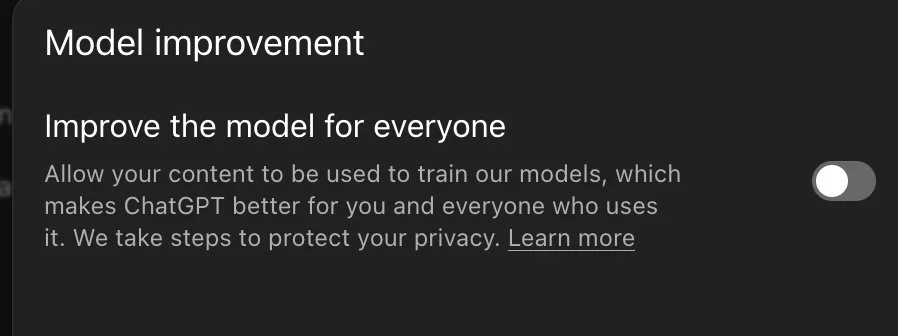
A professor spent months putting unpublished mathematics into OpenAI’s tool. OpenAI heard he was close and spent millions of dollars of inference on the same mountain, then said it did not read his work, and also that it cannot rule out his work having already been dissolved into the model.
Previously, OpenAI interested in a scientist’s unpublished research might have had to employ him. Now he pays monthly.
Sources
You might also like