The West Is Paying to Rebuild Nuclear Syria. Does It Know What It Is Buying?
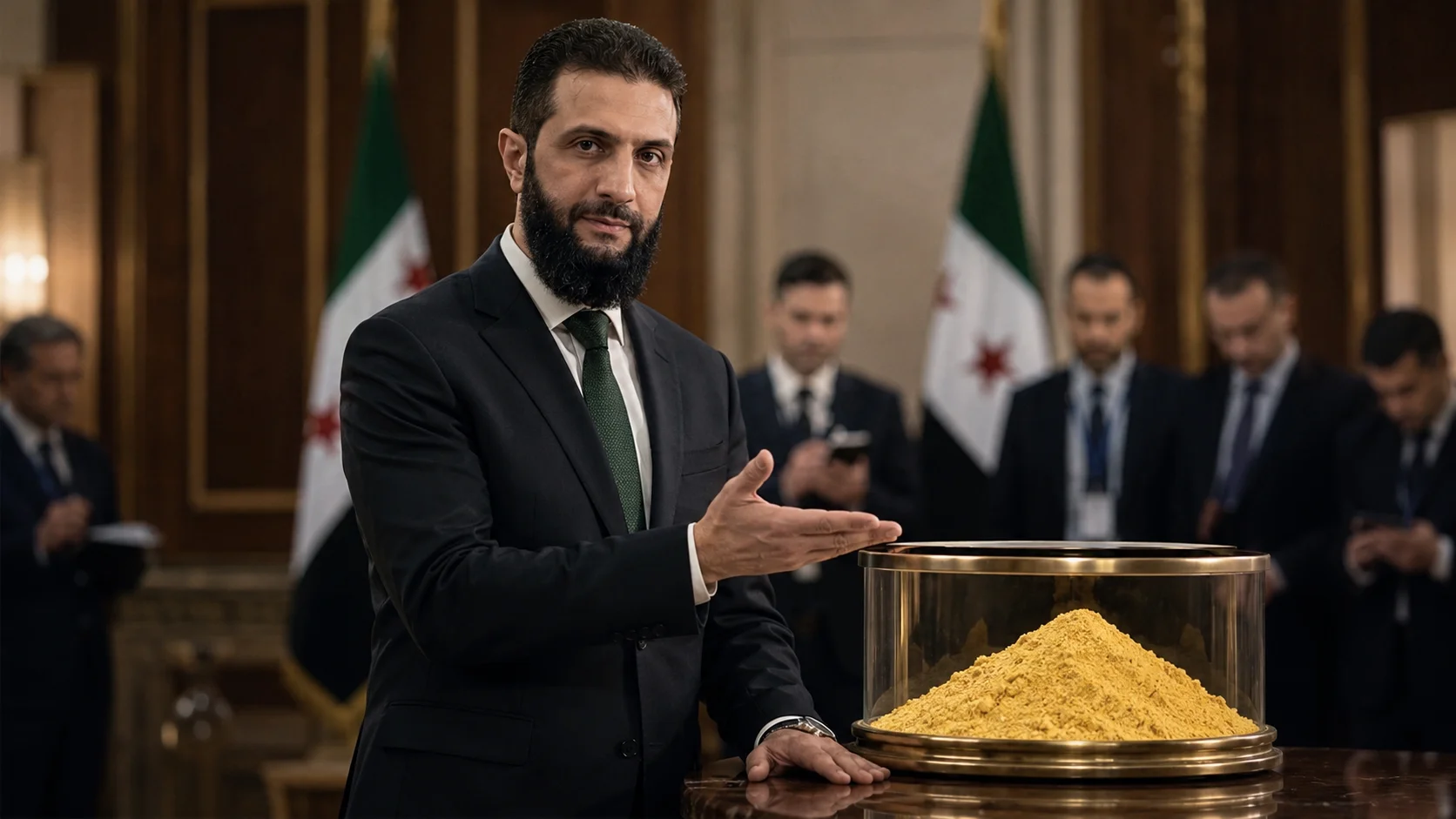
Damascus has discovered an unexpectedly useful inheritance from Bashar al-Assad: nuclear material.
Not enough to give Syria anything resembling an operational nuclear weapons programme, but, as an instrument of diplomacy, sovereignty and respectable international concern, the material is proving considerably more productive.
On August 10, Axios published a report saying the IAEA would soon remove the material from Site 99 after US-brokered understandings.
By August 11, Syrian officials were already being more careful. Damascus told Reuters that discussions remained underway and that “no final agreement” on removal had been concluded.
Then yesterday, August 18, al-Shaibani publicly announced that the material stays.
It will remain under safeguards, inspectors can account for it, and will only be used for peaceful civilian purposes.
The nuclear programme Assad forgot to take with him
The material belongs to the unresolved remains of Syria's clandestine nuclear activities under Assad.
Their centrepiece was Al-Kibar, a secret reactor being constructed in eastern Syria with North Korean assistance. Israel destroyed the facility in September 2007 before it became operational.
For years, Damascus provided inspectors with less than enthusiastic assistance in determining precisely what Assad had been building and where the associated materials had gone.
That changed after Assad's government collapsed in December 2024.
Al-Sharaa's administration began granting the IAEA greater access.
The quantity involved has been described as several tonnes. The Wall Street Journal reported that inspectors verified uranium metal stored for more than two decades.
Possessing uranium and possessing a useful nuclear programme are rather different achievements.
Syria has a tiny research reactor and has conducted limited uranium-processing work in the past, but it has no known operational enrichment programme and no operational nuclear power reactor. The much larger natural-uranium reactor around which Assad's clandestine programme was constructed has been an expensive hole in the Syrian desert since 2007.
Therefore, the value this material possesses is political.
Abu Mohammed al-Golani, statesman
Al-Sharaa's government has spent much of its short existence performing an extraordinary diplomatic conversion.
Ahmed al-Sharaa, previously known as Abu Mohammed al-Golani, a man whose political curriculum includes fighting with al-Qaeda in Iraq, founding the Nusra Front as al-Qaeda's Syrian affiliate and eventually transforming it into Hayat Tahrir al-Sham before leading the campaign that removed Assad.
The former Nusra commander now receives presidents, UN officials and international investors. Sanctions have been dismantled. Financial restrictions have been relaxed. Syria is being gradually reconnected to international markets. In July, UN Secretary-General António Guterres travelled to Damascus and publicly called for international support for Syrian reconstruction.
Syria desperately needs money.
The country requires reconstruction on a scale its exhausted domestic economy cannot finance. Gulf investment, European support, foreign capital, international institutions and restored banking relationships are central to whether it can rebuild the state it has inherited.
Even before taking Damascus, HTS had developed an unusually sophisticated financial and administrative structure in Idlib. Reuters later reported that figures from that system moved rapidly into Syria's new economic machinery after Assad fell, with trusted former HTS officials playing significant roles in managing assets and restructuring the economy.
The elegance of the arrangement is that almost everyone receives something.
The IAEA gets access to material it previously could not properly monitor.
Syria gets recognition of its custody and peaceful nuclear rights.
Washington gets cooperation rather than another uncontrolled proliferation dispute.
Al-Sharaa gets another photograph in which his government looks respectable.
Even Israel gets an inspected stockpile rather than an unknown one, although it may understandably prefer the material somewhere else entirely.
A few tonnes of safeguarded uranium do not transform Syria into a nuclear power. They do, however, allow Damascus to invoke sovereignty, discuss peaceful nuclear development, negotiate with Washington, host the IAEA.
The former jihadist commander appears to have learned, that power does not always require using an asset. Sometimes it consists of making everyone else ask what you intend to do with it.
There are very good reasons to help rebuild Syria.
A ruined Syria is hardly in Europe's interest.
The European Union and Washington has therefore lifted most of its economic sanctions and announced around €620 million in support for Syria for 2026 and 2027, covering humanitarian assistance, early recovery and broader support.
A functioning Syrian economy offers better prospects for regional stability.
Ahmed al-Sharaa may prove to be exactly the pragmatic leader he now presents to the world.
Syria may emerge from this transition as a pluralistic state and its former Islamist insurgents gradually become extremely tedious ministers arguing about electricity tariffs.
That would be an excellent outcome.
There is a difference between financing stability and financing a government that currently appears stable.
If Europe and America are going to help finance the new Syria, they should be asking for more than reassuring speeches and photographs beside international officials.
They should be asking for civil rights that survive presidents, religious freedom, institutions capable of restraining the state and enforceable protections for minorities.
Eight days earlier, US and Israeli officials were telling Axios that Washington had brokered understandings under which the material would be removed from Syria.
Damascus responded the following day that no final agreement existed.
Yesterday it announced that the material would stay.
Either Washington and Israel believed they had secured considerably more than Syria had actually agreed to, or Damascus subsequently changed its position.
For governments and institutions now being asked to finance Syria's reconstruction, it does raise an obvious question: how much confidence should be placed in today's assurances when even an agreement involving several tonnes of mostly useless nuclear material can apparently mean different things in Washington, Jerusalem and Damascus within eight days?
Sources
Mohlo by vás zaujímať