Turkey Finds Turkish Seals In Greek Waters
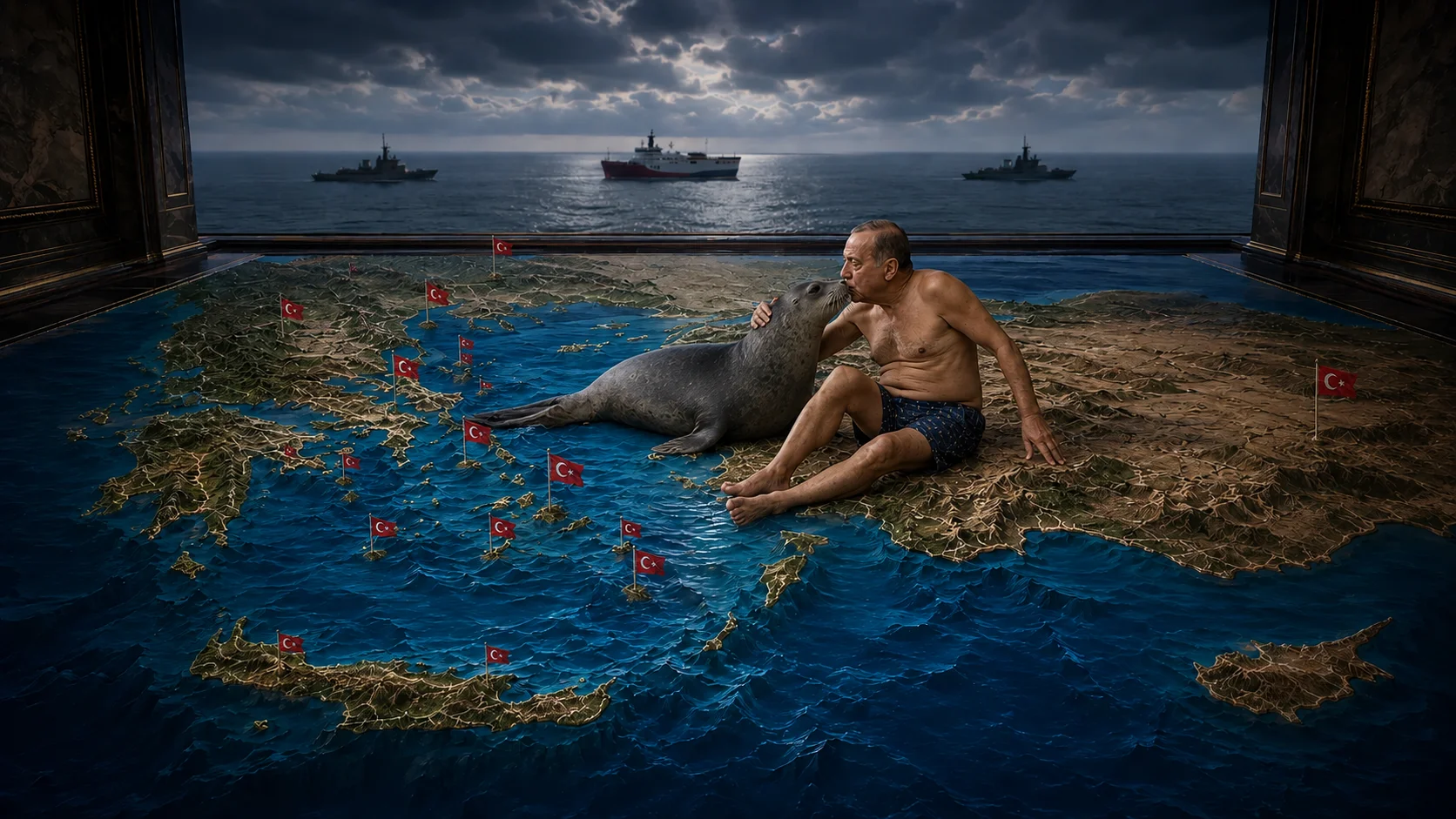
On August 15, Erdogan issued two presidential decisions declaring “Turkish national marine parks” in the northeastern Aegean and the eastern Mediterranean. The funny maps extend far beyond Turkish territorial waters.
The Greek Foreign Ministry states that where the Turkish parks extend into international waters, their unilateral establishment is illegal under the Law of the Sea. Where they extend over the Greek continental shelf, they are likewise illegal and have no effect on Greek sovereign rights. Most importantly, Greece says explicitly that Turkey's unilateral declarations cannot create faits accomplis.
The argument underneath all of this is supposedly about who has jurisdiction over which part of the sea.
Except this is not some mysterious clash of equally valid Greek and Turkish interpretations.
This is Greece.
Rhodes is Greece. Kastellorizo is Greece. Lemnos is Greece. Samothrace is Greece. Crete is Greece.
The hundreds of inhabited Greek islands scattered across the Aegean are not temporary inconveniences waiting for Recep Tayyip Erdogan to find a sufficiently large blue marker.
Their maritime rights are not some exotic Greek interpretation of international law.
Article 121 of the United Nations Convention on the Law of the Sea states that islands generate a territorial sea, contiguous zone, exclusive economic zone (EEZ) and continental shelf under the same rules as other land territory. The International Court of Justice has explicitly recognised Article 121(2) as reflecting customary international law.
Within its EEZ, a coastal state has sovereign rights to explore, exploit, conserve and manage natural resources in the water, seabed and subsoil, together with jurisdiction over matters including installations, marine scientific research and environmental protection.
Where Greek and Turkish maritime entitlements overlap, the eventual boundary has to be delimited by agreement or, failing that, under the rules of international law aimed at an equitable solution.
There is no legitimate legal theory under which Rhodes, Kastellorizo, Lemnos, Samothrace or Crete simply stop generating maritime entitlements because Turkey would prefer a larger piece of blue.
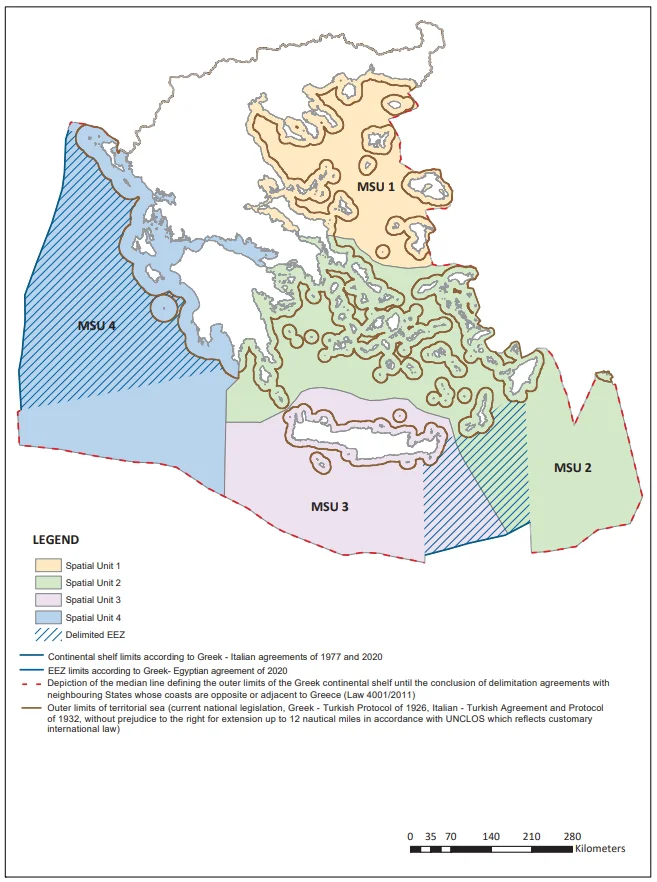
Chevron and ExxonMobil are not investing according to Erdogan's Blue Homeland map. They are signing contracts and conducting exploration under Greek licences. There is infrastructure, capital and potentially billions worth of hydrocarbons attached, which, of course, are very interesting for the failing Turkish economy.
The Blue Homeland fever dream
Turkey calls it Mavi Vatan, the “Blue Homeland.”
Erdogan does not hide what the doctrine means politically. He has publicly promised to defend Turkey’s alleged rights in the “Blue Homeland” across the Aegean and Eastern Mediterranean and to pursue what Turkey considers its interests there “without seeking anyone’s approval.”
Turkey disliking geography does not change the geography.
The Turkish fever dream showing the amount of sea Ankara would like to possess has no legal footing whatsoever.
Turkey chose not to become a party to UNCLOS precisely because it objects to aspects of the maritime regime in the Aegean. Ankara has been unusually candid about that. But declining to sign the rulebook does not make the rules disappear.
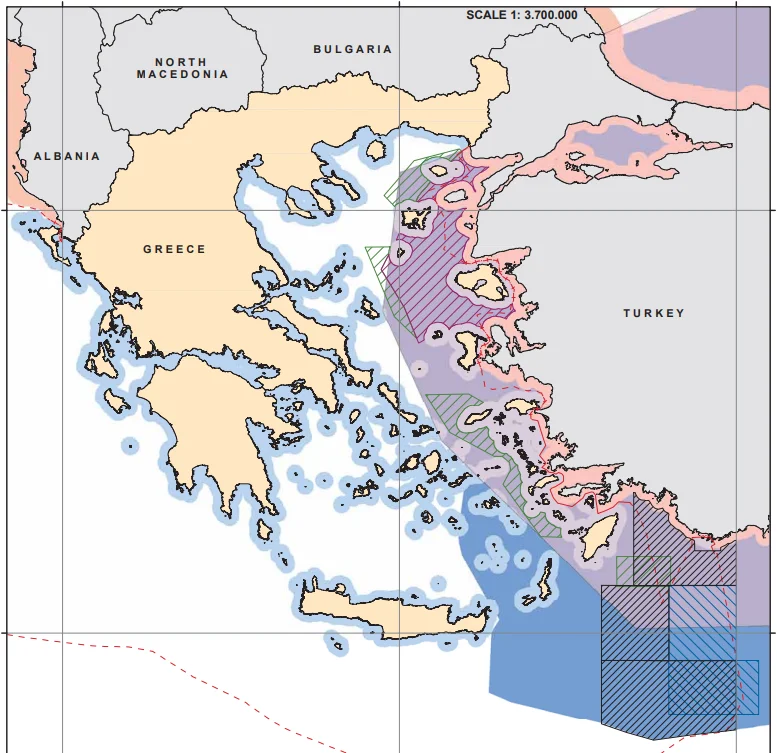
The Gas and the Americans
It would be tempting to dismiss the entire exercise as another chapter in Erdogan's Blue Homeland colouring book. Unfortunately, there is considerably more money under the colouring book now.
On February 16, US Chevron and Helleniq Energy signed exclusive agreements to explore four deep-water blocks south of the Peloponnese and Crete, covering approximately 47,000 square kilometres. The deal doubled the Greek maritime acreage available for exploration. ExxonMobil is already involved in other Greek offshore exploration.
Three days later Turkey objected.
Not because the Chevron blocks directly crossed Turkey's continental shelf. Ankara itself acknowledged that they did not. Instead, Turkey claimed the Greek-Chevron activity violated maritime rights asserted by Libya under the 2019 Turkey-Libya maritime memorandum, the agreement that rather conveniently draws a Turkish-Libyan maritime corridor while treating Crete as an unfortunate geographical misunderstanding.
The hydrocarbons under the seabed are not some international lucky dip into which everybody with a sufficiently colourful map may insert a straw. Exploitation of those resources belongs to the coastal state exercising the corresponding continental-shelf and EEZ rights.
Turkey can publish as many maps as it likes. It can colour the Aegean pink, declare Greek waters a Turkish nature reserve and perhaps issue every monk seal a tiny red passport while it is at it.
None of this changes international law.
Terminology
A fait accompli is literally an “accomplished fact”: you act unilaterally first, then present the result as an existing reality everybody else now has to deal with. In territorial disputes that can mean publishing maps, issuing decrees, licensing activities, patrolling an area, or creating administrative designations.
None of this magically creates sovereignty.
The political trick is to manufacture a paper trail and a pattern of behaviour so that, ten years later, you can point at it and say, “But we have treated this as ours for years.”
Greece’s Foreign Ministry used exactly that language yesterday, saying Turkey’s decrees cannot create faits accomplis and have “no legal effect whatsoever.”
Mohlo by vás zaujímať